Most tourist visas for US citizens process within two to four weeks under normal conditions.
Appointment wait times at embassies can extend the total timeline to several months during peak seasons.
The U.S. State Department identifies visa processing timelines as estimates rather than guarantees for any destination country.
Embassy staffing, seasonal application volume, and individual case complexity all affect how quickly your passport returns with a visa stamp.
This guide covers tourist visa timelines by destination, application stages explained, and realistic strategies for faster processing.
You will learn exactly when to apply, what slows things down, and how to time your visa application around firm travel dates.
How Long Does It Take to Get a Visa
Tourist visa processing for US citizens typically takes two to six weeks from application submission to passport return.
The total timeline stretches longer when appointment wait times at the embassy add weeks before you submit documents.
eVisa applications process fastest. Many eVisa approvals arrive within 24 to 72 hours via email.
Schengen visa processing averages 15 calendar days but can extend to 45 days during peak summer application periods.
Embassy visa applications for countries like China, India, and Brazil typically take five to fifteen business days after the appointment.
Some countries add administrative processing delays that extend timelines by weeks without explanation or recourse.
First-time international travelers should add two extra weeks to every timeline estimate for document gathering and application mistakes.
First-timers frequently submit incomplete forms or incorrect passport photos that trigger resubmission delays.
Business travelers with fixed meeting dates should start the visa process at least eight weeks before departure.
A business trip to China with a conference date cannot absorb a six-week embassy delay without risking the entire trip.
Visa processing has no universal timeline. Every country sets its own processing speed and appointment availability independently.
Check the official embassy website for your destination country before booking any non-refundable flight.
Key Takeaway: Two to six weeks covers most tourist visas, but appointment waits can double the total timeline.
Visa Processing Times by Country
Visa processing times vary dramatically by destination country, visa type, and whether an eVisa option exists for US citizens.
The following table compares current typical processing windows for tourist visas to popular US traveler destinations.
Schengen Area countries process visas in 15 calendar days typically with a maximum of 45 days for complex cases.
Australia processes most eVisitor and ETA applications within minutes to 48 hours for US citizens.
China tourist visa processing takes four to ten business days after the in-person appointment at the Chinese consulate.
Appointment wait times at busy consulates like Los Angeles or New York can add three to six weeks before the application clock starts.
India eVisa applications for US citizens typically process within 24 to 72 hours with most approvals arriving within one business day.
The India eVisa approval arrives by email. No passport mailing or embassy visit is required.
Budget travelers should prioritize eVisa destinations for the fastest, cheapest, and most predictable processing experience.
Brazil, Kenya, Vietnam, and Turkey all offer eVisa options for US citizens with processing under five business days.
Families with children should verify processing times for each family member. Some countries require separate applications per person.
A family of four applying for China visas may face four separate appointment slots and four separate processing timelines.
Visa processing timeline comparison by destination:
| Country | Visa Type | Processing Time | Appointment Wait | eVisa Available | Best For |
|---|---|---|---|---|---|
| Schengen Area | Short-stay tourist | 15 calendar days typical | 2-8 weeks seasonal | No | Leisure, extended Europe trips |
| Australia | eVisitor/ETA | 24-48 hours | None | Yes | Spontaneous travelers |
| China | L Tourist | 4-10 business days | 2-6 weeks | No | Planned itineraries |
| India | eVisa tourist | 24-72 hours | None | Yes | Flexible travelers |
| Brazil | eVisa tourist | 3-5 business days | None | Yes | Budget-conscious travelers |
| Vietnam | eVisa tourist | 3 business days | None | Yes | Short-notice trips |
| Kenya | eVisa tourist | 2-3 business days | None | Yes | Safari travelers |
| Russia | Tourist visa | 4-20 business days | Varies | No | High-planning travelers |
Key Takeaway: eVisa destinations process fastest. Embassy visas require factoring appointment wait plus processing time.
Visa Application Timeline
A visa application timeline breaks into five distinct stages from initial research to passport in hand.
Understanding each stage’s realistic duration prevents booking flights before the visa exists in your passport.
Stage one is document gathering. This takes two to seven days for most applicants.
You need passport photos, bank statements, flight itineraries, hotel bookings, and travel insurance documentation.
Stage two is the application form completion. Budget one full afternoon for a tourist visa application.
Schengen and China visa forms require detailed employment history and all previous international travel dates.
Stage three is the appointment wait. This stage causes the most traveler frustration and timeline failure.
Some embassies book appointments four to eight weeks out during summer and holiday application peaks.
Stage four is the actual embassy processing after your appointment or mailed application arrives.
This runs three to fifteen business days for most countries with standard tourist visa applications.
Stage five is passport return. Budget three to seven business days for courier or mail service.
Some visa application centers offer in-person passport pickup that cuts this stage to the same day.
Business travelers should compress this timeline by scheduling appointments before completing document gathering.
Book the earliest available appointment slot. Then build documents and complete forms in the weeks before that date.
How Far in Advance to Apply for a Visa
Apply for a tourist visa eight to twelve weeks before your intended departure date for embassy visa destinations.
This buffer absorbs appointment wait times, processing delays, and administrative processing without threatening your travel dates.
eVisa applications require only two to four weeks of lead time before departure for most countries.
Some eVisas approve within 24 hours. The buffer covers application errors that require resubmission or correction.
Visa-on-arrival destinations require zero advance application. You receive the visa at the destination airport after landing.
The buffer for visa-on-arrival travel is simply arriving with the correct documents, passport photos, and fee currency.
First-time international travelers should add two extra weeks to every recommended timeline for learning curve delays.
A first-timer applying for a Schengen visa encounters unfamiliar document requirements and form fields that experienced travelers navigate faster.
Families with children should add three weeks to standard timelines for multi-person application coordination.
Four separate applications, four sets of passport photos, and four appointment slots multiply the chance of a single error stalling the entire family submission.
Peak travel season applications require the longest lead times. Apply for summer travel visas by March or early April.
Embassy appointment slots for Schengen visas in May and June fill completely by April in many US cities.
Apply as early as the embassy permits. Most embassies accept tourist visa applications up to 90 days before travel.
Applying on the earliest eligible date locks in your appointment and processing window before peak season demand surges.
How Long Does a Tourist Visa Take
A standard tourist visa for US citizens takes two to six weeks from application submission to passport return.
eVisa tourist applications process faster. Most deliver approval within one to five business days via email.
Embassy tourist visas require an in-person appointment in most cases. The appointment wait adds two to eight weeks to the total timeline.
After the appointment, actual processing runs four to fifteen business days for standard tourist applications.
Schengen tourist visas process in 15 calendar days typically. Complex cases take up to 45 calendar days.
This timeline starts when the embassy or consulate receives your complete application, not when you submit it.
China tourist visas process in four to ten business days after the consulate appointment.
Rush processing for China visas cuts the timeline to two to three business days for an additional fee at many consulates.
Budget travelers should avoid rush processing fees by applying early rather than paying for expedited service.
Rush fees can double or triple the standard visa application cost on some country applications.
Solo travelers with flexible itineraries should target eVisa destinations for the fastest, least expensive tourist visa experience.
A solo traveler with no fixed date can build an itinerary around whichever visa approves first among several eVisa destinations.
Tourist visa validity varies. Some countries issue visas valid for 90 days. Others grant multi-year validity.
Check the visa validity period against your planned travel dates. Do not apply so early that the visa expires before travel.
Key Takeaway: Tourist visas run two to six weeks. eVisas take days. Embassy appointment waits extend timelines most.
US Visa Processing Time
US visa processing times apply to foreign nationals applying to visit the United States, not to US citizens traveling abroad.
US citizens do not need a visa to return to the United States after international travel.
The U.S. State Department publishes current visa appointment wait times for every US embassy and consulate worldwide.
Tourist visa (B1/B2) processing times at US embassies range from a few days to several months depending on the specific location.
Appointment wait times at US embassies in India, Mexico, and China have historically stretched to several months during peak periods.
After the visa interview, administrative processing adds unpredictable days or weeks without transparency for the applicant.
Business travelers coming to the US on a B1 visa should apply at the earliest possible date for their home country’s US embassy.
Conferences, meetings, and trade shows with fixed dates require visa certainty that only early application provides.
Visa waiver program countries do not require a US visa. Citizens of these countries use ESTA authorization instead.
ESTA approval typically arrives within 72 hours and requires no embassy visit or passport mailing.
The U.S. State Department travel website displays current wait times searchable by embassy or consulate location.
Confirm wait times at the specific embassy where you will apply before making travel arrangements to the United States.
Schengen Visa Processing Time
Schengen visa processing time for US citizens averages 15 calendar days from the date the embassy receives the complete application.
The Schengen Area comprises 27 European countries that share a common short-stay visa policy for visitors.
US citizens do not need a Schengen visa for tourist stays under 90 days within any 180-day period currently.
This exemption remains in effect as of recent policy. Verify current Schengen entry requirements on the official EU travel page before booking.
Non-US citizens residing in the US on a Green Card or visa must apply for a Schengen visa to visit most of Europe.
The 15-day processing clock starts when the application reaches the embassy, not when you mail it or attend the appointment.
Peak summer processing stretches timelines. Budget 30 to 45 days for Schengen visa applications submitted May through August.
Embassy closures for European and US holidays during summer add extra non-processing days to the calendar.
ETIAS authorization launches for visa-exempt travelers including US citizens visiting the Schengen Area.
Check the official ETIAS site for current implementation status. The authorization links electronically to your passport.
Apply for a Schengen visa at the embassy of the country where you will spend the most nights during your trip.
If nights are equal across countries, apply at the embassy of the country where you will first enter the Schengen Area.
Fastest Visa to Get for US Citizens
The fastest visas for US citizens to obtain are electronic travel authorizations and eVisas with automated approval systems.
ESTA authorization for visa waiver countries approves within minutes to 72 hours with no embassy visit required.
Australia eVisitor and ETA applications approve within minutes for most US citizens with clean travel histories.
India eVisa processes within 24 to 72 hours. Most approvals arrive within one business day by email.
Turkey eVisa processes within minutes for US citizens who complete the online application and payment.
The approval arrives as a PDF. Print it or display it on a phone at the immigration checkpoint.
Kenya, Vietnam, and Sri Lanka eVisas process within two to five business days typically for US applicants.
These countries offer the combination of fast processing, no embassy visit, and no passport mailing requirement.
Budget travelers should build itineraries around eVisa and visa-free destinations for the lowest cost and fastest approval.
A budget trip through Turkey, Georgia, and Armenia encounters no embassy visits and no visa-related trip delays.
First-time international travelers should choose an eVisa destination for the first trip to eliminate visa stress.
The India eVisa application process is entirely online. Approval arrives by email. No physical documents leave your possession.
Visa-on-arrival destinations offer instant approval at the destination airport. No advance application is required at all.
Thailand, Indonesia, Jordan, and the Maldives grant visas on arrival to US citizens with payment in local or major currencies.
eVisa Processing Time
eVisa processing time for US citizens typically ranges from instant approval to five business days depending on the country.
An eVisa application submits entirely online. You upload documents, pay the fee, and receive approval by email.
Turkey eVisas approve within minutes for US citizens at any hour of the day or night.
The system is fully automated. Approvals arrive as downloadable PDFs immediately after successful payment processing.
India eVisas process within 24 to 72 hours with the majority approved within one business day.
The Indian eVisa portal sends email status updates. The approved eVisa arrives as a PDF attachment to that email.
Kenya, Vietnam, and Bahrain eVisas process within three to five business days under normal conditions.
Weekends and local holidays in the destination country extend the eVisa processing timeline by non-business days.
Business travelers on short-notice trips should verify eVisa eligibility before booking. Approval timing is predictable.
A business trip to India can proceed within 72 hours of application if all documents upload correctly on the first attempt.
Families with children must submit separate eVisa applications for each traveler including infants on their own passports.
A family of four to Kenya requires four separate eVisa applications, four separate fees, and four separate approval emails.
eVisa approval speed depends on uploading correct documents in the specified file format and size on the first try.
Rejected document uploads restart the clock and require resubmission before processing begins again.
Visa on Arrival Processing Time
Visa on arrival processing time at the destination airport takes 15 to 60 minutes typically after deplaning.
A visa on arrival requires no advance application. You receive the visa at a dedicated counter before passport control.
Countries offering visa on arrival for US citizens include Thailand, Indonesia, Jordan, Nepal, and the Maldives.
Some countries charge a visa on arrival fee payable in US dollars or major currencies. Local currency is often accepted.
The visa on arrival process follows a simple sequence. Fill out a short form. Pay the fee. Receive the visa sticker or stamp.
Then proceed to the immigration queue. The visa counter sits before passport control in most airports.
First-time international travelers find visa on arrival less intimidating than embassy applications. Everything happens in one place.
The process requires no advance planning beyond bringing passport photos and the correct fee currency.
Solo travelers should carry two extra passport photos and clean US dollar bills for visa on arrival fees at any destination.
A solo traveler stuck without the correct fee currency at an airport visa counter has limited options for problem-solving alone.
Visa on arrival processing time increases when multiple wide-body flights arrive simultaneously at smaller airports.
The visa counter line behind a full A380 from Dubai can stretch processing time from 15 minutes to an hour.
Confirm visa on arrival eligibility before departure. Some countries require pre-approval even for visa on arrival access.
Verify current visa on arrival eligibility for US citizens at the official immigration website of your destination country.
Visa Appointment Wait Times
Visa appointment wait times at embassies range from same-week availability to several months depending on the location and season.
Appointment wait time is the period between requesting an appointment and the earliest available slot at the embassy.
US embassies in high-demand locations like India and Mexico often post wait times exceeding 100 days for tourist visa appointments.
Schengen embassies in US cities like Los Angeles, New York, and Miami book four to eight weeks out during summer peak.
Business travelers with urgent travel needs can sometimes access emergency appointment slots at certain embassies.
Emergency appointments require documented proof of urgent travel for business, medical, or humanitarian reasons.
Families with children should book the earliest available appointment and work backward to complete document preparation.
The appointment date locks in the application timeline. Documents can be gathered and forms completed in the weeks before that date.
Appointment wait times typically shorten during off-peak months like January, February, September, and October.
Travelers with flexible trip dates can reduce total visa timelines by applying during these lower-demand windows.
Most embassies release appointment slots on a rolling basis. Check the booking portal multiple times per day for cancellations.
Same-week cancellations appear randomly. Frequent checking sometimes surfaces an appointment slot months earlier than the official wait estimate.
The U.S. State Department publishes current appointment wait times for US embassies worldwide on its official visa wait times page.
Check the embassy website for your destination country directly. Some embassies publish their own wait time data independently.
How Long Does Embassy Visa Processing Take
Embassy visa processing after the appointment takes four to fifteen business days for most tourist visa applications.
This processing window starts when the embassy receives your passport and application, not the date of your appointment.
Some embassies process applications faster. Mexico tourist cards issue at the border or online within minutes.
Brazil eVisa processing runs three to five business days after online application submission.
China tourist visa processing at US consulates runs four to ten business days after the in-person appointment.
Rush service cuts China visa processing to two to three business days at many consulates for an additional fee.
Business travelers should verify rush processing availability before the appointment date if the travel date sits within two weeks.
Rush processing fees vary by country. Some embassies offer confirmed rush windows. Others consider rush processing on a case-by-case basis.
First-time international travelers should budget the longer end of every processing range for their first visa application.
First-time applicants face a higher rate of document corrections and administrative queries that extend standard processing windows.
Administrative processing adds unpredictable time after the standard processing window closes without explanation or timeline estimates.
The embassy does not provide daily updates during administrative processing. Applicants wait without visibility into the timeline.
How Long Does Visa Stamping Take
Visa stamping takes one to five business days after the embassy approves the application for most tourist visas.
Visa stamping is the physical process of placing the visa sticker or stamp inside your passport before return.
The stamping timeline is the shortest stage of the overall visa process but still adds days to passport return.
Some visa application centers offer same-day passport pickup after stamping for an additional courier service fee.
This option eliminates the three to seven business days of mail or courier transit for passport return.
Business travelers on tight turnaround should select in-person pickup if the visa application center offers it.
Picking up the passport in person shaves a full week off the total timeline compared to courier return service.
Families with children must confirm that all family members’ passports are stamped and ready before scheduling pickup.
A family application may process at slightly different speeds for different members despite being submitted together.
Visa stamping errors occur occasionally. Check the visa dates, name spelling, and passport number immediately upon receiving your passport.
A visa with an incorrect date or name typo requires correction at the embassy before travel. This adds days or weeks to the process.
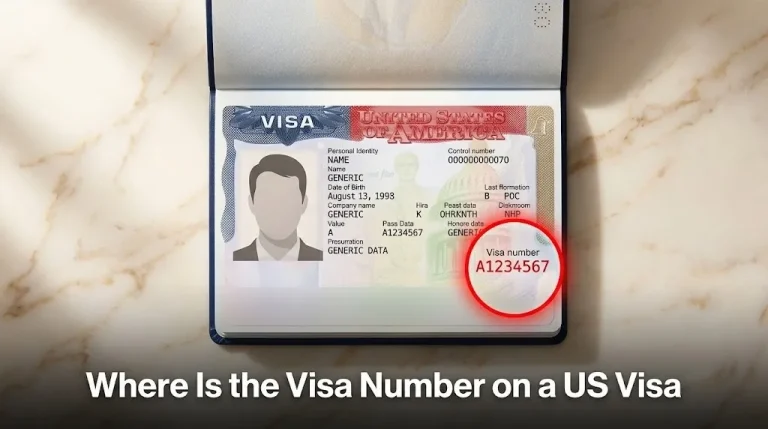
The visa stamp or sticker includes your name, passport number, visa validity dates, number of entries allowed, and visa category.
Photograph the visa page before traveling. If the passport is lost abroad, a photo of the visa helps with replacement documentation.
How to Expedite Visa Processing
Expedite visa processing by requesting rush service at the embassy, using a visa expediting service, or applying for an eVisa instead.
Not every embassy offers rush processing. Confirm availability before counting on an expedited timeline.
Some embassies offer a confirmed rush processing window for a fee that roughly doubles the standard application cost.
China consulates offer rush service at two to three business days. Brazil eVisa processes in three to five days with no rush option.
Private visa expediting companies hand-carry applications to embassies for same-day or next-day processing where available.
These services charge fees ranging from roughly one hundred to several hundred dollars above the standard visa application fee.
Business travelers with urgent departure dates should contact the embassy directly first to confirm rush options before hiring an expeditor.
An expeditor cannot bypass an embassy that does not offer rush processing regardless of the fee charged.
Budget travelers should avoid expediting fees entirely by applying well before the travel date during off-peak application months.
Expediting fees add cost without adding value for a traveler who started the process with eight weeks of lead time.
eVisa applications process faster than any expedited embassy visa. Shift destinations if an eVisa exists for a nearby country.
Vietnam eVisa processes in three days. A rush China visa takes two to three days plus appointment wait. The eVisa wins on total timeline.
Expediting only compresses the processing stage. It does not compress the document gathering stage or passport return time.
Start document gathering early even if you plan to pay for rush processing at the embassy.
What Delays Visa Processing
Common visa processing delays include incomplete applications, incorrect passport photos, missing supporting documents, and peak season application volume.
Administrative processing is an opaque post-interview review period that adds unpredictable days or weeks without explanation.
Applications flagged for administrative processing cannot be expedited. The applicant waits without a published timeline for resolution.
Incomplete application forms cause the most common avoidable delay. A single blank field stalls the entire process.
Read every field on the application form. Complete every entry. Use “N/A” for fields that genuinely do not apply to you.
First-time international travelers submit incorrect passport photos more frequently than experienced applicants.
Each country specifies photo dimensions, background color, and recency requirements. Generic passport photos often fail specific embassy standards.
Business travelers face delays when the invitation letter from the host company contains incorrect dates or missing registration details.
The embassy verifies the invitation letter against the application. Mismatched conference dates or company names trigger additional review.
Peak season volume delays processing simply through application queue length. More applications mean longer waits for everyone.
Apply during off-peak months for the fastest processing. January, February, September, and October see the lowest application volumes.
Missing travel insurance documentation delays Schengen visa applications specifically. The insurance must meet the Schengen minimum coverage amount.
Verify insurance coverage requirements before submitting. Purchase a policy that matches the embassy’s stated minimums exactly.
How to Check Visa Application Status
Check visa application status through the embassy’s online tracking portal, the visa application center website, or by contacting the embassy directly.
Most eVisas and embassy visas provide a tracking number or application reference code at the time of submission.
Save this number immediately. Without the tracking code, status checks become difficult and often require emailing the embassy.
eVisa status portals update in real time. Log in with your application number and passport number to see the current stage.
India eVisa status portal shows received, under review, approved, or rejected with clear color-coded indicators.
Embassy visa tracking portals typically show fewer stages. The status moves from received to under processing to approved.
Some embassy portals only update at the beginning and end of processing. No intermediate status updates appear during the review.
Business travelers waiting on a visa for an imminent departure should call the embassy or consulate directly during published phone hours.
Phone inquiries sometimes surface information that the online portal does not display, including administrative processing flags.
First-time international travelers should check the visa status portal daily after the estimated processing window opens.
Catching a document request or correction notification early prevents days of unnecessary delay in the processing timeline.
Contact the visa application center or courier service for passport return status once the visa shows as approved in the portal.
The passport may sit in a courier queue for several days after approval before the tracking number activates for return shipment.
Important Accuracy Notes for Visa Processing Times
Visa processing times, appointment wait times, eVisa eligibility, and visa-on-arrival availability change frequently and without public notice.
Verify the following directly before booking any non-refundable flight:
- Visa processing time at the specific embassy or consulate where you will apply. Check the official embassy website for current estimates. Processing times at one city’s consulate differ from another.
- eVisa eligibility for US citizens at your intended destination. Countries launch, suspend, and modify eVisa programs without advance warning. Confirm on the official immigration website.
- Visa-on-arrival availability at your destination airport. Some countries restrict visa on arrival to specific entry points. Not every airport offers it.
- Current appointment wait times at the embassy. Wait times during peak season can triple from off-peak levels without notice.
- Supporting document requirements for your specific visa category. Document checklists change when countries update their immigration rules.
- Passport validity requirements for your destination. Many countries require six months of validity beyond your planned departure date.
Check the official embassy website or the U.S. State Department travel page within one week of departure for current entry requirements.
Frequently Asked Questions About Visa Processing Times
How long does it take to get a tourist visa for most countries?
Tourist visa processing for US citizens takes two to six weeks from application submission to passport return for most embassy visas.
eVisa applications process within one to five business days for countries offering electronic visa options to US travelers.
Appointment wait times at embassies can add two to eight weeks before the processing clock begins during peak seasons.
Can I get a visa in one week if I need to travel urgently?
Some countries offer rush processing that delivers a visa within two to three business days after the embassy appointment.
eVisa applications for India, Turkey, and Australia approve within 24 to 72 hours for many US citizen applicants.
Visa-on-arrival destinations require zero advance processing time but limit your destination options to countries offering this entry method.
What is the fastest visa a US citizen can get?
eVisas for Turkey and Australia process the fastest with approvals often arriving within minutes of application submission for US citizens.
ESTA authorization for visa waiver countries approves within minutes to 72 hours with no embassy visit required.
Visa-on-arrival destinations process instantly at the destination airport but require traveling with correct documents and fee currency.
How far in advance should I apply for a visa before my trip?
Apply for an embassy visa eight to twelve weeks before departure to absorb appointment wait times and processing delays.
eVisa applications require two to four weeks of lead time to handle any application errors that need correction and resubmission.
Visa-on-arrival travel requires no advance application but confirm eligibility and document requirements before booking flights.
Does the visa processing time include the appointment wait?
Visa processing time typically does not include the appointment wait time at the embassy.
The processing clock starts when the embassy receives your complete application, not when you book the appointment.
Add appointment wait time plus processing time plus passport return time for the true total visa timeline.
What can delay my visa application processing?
Incomplete application forms, incorrect passport photos, and missing supporting documents cause the most common processing delays.
Administrative processing adds unpredictable weeks without explanation and cannot be expedited by the applicant or a visa service.
Peak season application volume during summer and holiday periods extends processing times simply through application queue length.
Visa processing timelines range from instant eVisa approvals to several months when appointment waits and processing combine during peak seasons.
Start your visa application eight to twelve weeks before travel for embassy visas and two to four weeks before travel for eVisas.
Choose eVisa and visa-on-arrival destinations when your travel dates are fixed and the planning window is short.
Visa processing times, eVisa programs, and appointment availability change without notice. Verify current timelines at the official embassy website or the U.S. State Department travel page before booking flights and again one week before departure.
Check the embassy website. Confirm eVisa eligibility. Book appointments early. Your visa timeline starts with verification, not assumptions.