How long can you stay in the US on a tourist visa is the most important question for international visitors. The B-1/B-2 tourist visa typically allows stays of up to 6 months per entry.
The U.S. State Department confirms that the U.S. Customs and Border Protection officer at the port of entry makes the final stay duration determination. The officer stamps your passport or issues an electronic I-94 Form with your authorized departure date.
This guide covers every aspect of U.S. tourist visa stay duration in 2026. You will find the critical distinction between visa validity and authorized stay, extension procedures, re-entry strategies, and clear documentation guidance for the border entry process.
How Long Can You Stay in the US on a Tourist Visa
How long can you stay in the US on a tourist visa depends on the CBP officer at your port of entry. The maximum stay is typically 6 months per visit.
The B-1/B-2 tourist visa allows entry for tourism, visiting family, medical treatment, or short business activities. The visa itself does not guarantee any specific length of stay.
First-time international travelers should understand the CBP officer determines your authorized stay. The officer reviews your travel purpose and intended departure date.
Solo travelers visiting family should carry documentation of their relatives. Having the address and contact information ready speeds the entry process.
Business travelers on a B-1 visa should carry meeting invitations. The officer may ask about your business purpose and planned activities.
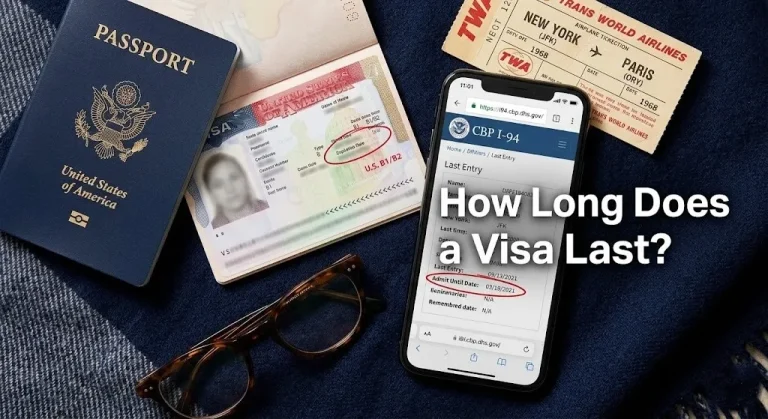
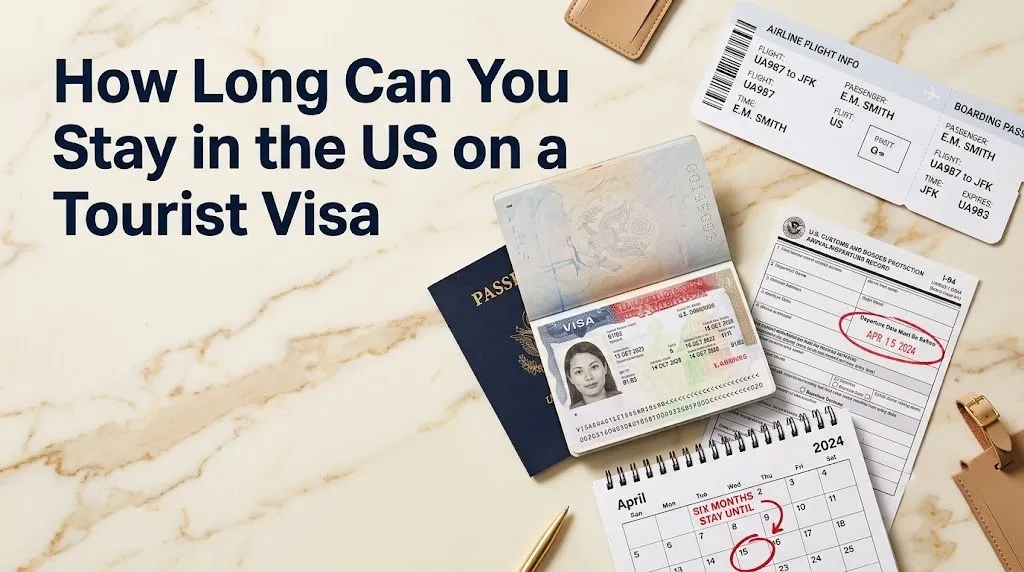
The authorized stay period appears on your I-94 Form. Check your I-94 online immediately after entry at the official CBP website.
Key Takeaway: The B-1/B-2 tourist visa allows stays up to 6 months per entry with the CBP officer making the final determination at the port of entry.
How Long Does a Tourist Visa Last
How long does a tourist visa last refers to the visa validity period printed in your passport. This is different from how long you can stay per visit.
The visa validity period may range from 1 year to 10 years depending on your country of citizenship. The U.S. State Department uses reciprocity schedules to determine visa validity.
The visa validity period tells you when you can enter the United States. You can enter multiple times during the validity period unless your visa is single-entry.
First-time visa holders should check the expiration date on their visa. The visa must be valid on the day you seek entry to the United States.
Solo travelers with 10-year visas should still check their passport validity. Some countries require passport validity beyond the visa expiration.
The visa validity date does not determine your departure date. The CBP officer assigns your authorized stay independently of visa validity.
Key Takeaway: Tourist visa validity ranges from 1 to 10 years depending on nationality while authorized stay per visit is determined separately by CBP.
How Long Can You Stay in US on Tourist Visa
How long can you stay in US on tourist visa per entry is typically up to 6 months. The CBP officer may grant a shorter period based on your circumstances.
The standard maximum authorized stay is 6 months for B-1/B-2 visitors. Some travelers may receive only 3 months or less depending on their travel purpose.
First-time visitors should clearly communicate their intended departure date. Having a return ticket demonstrates your plan to leave within the authorized period.
Families visiting relatives for extended periods should request sufficient time. The CBP officer may ask about your ties to your home country.
Solo travelers on extended U.S. trips should carry evidence of home country obligations. Employment letters or property ownership documents demonstrate your intention to return.
The authorized stay appears on your I-94 Form. Verify the date on your I-94 matches your expectations before leaving the airport.
Key Takeaway: The CBP officer determines your authorized stay up to a maximum of 6 months per entry with the I-94 Form recording your required departure date.
How Long Is Tourist Visa in USA
How long is tourist visa in USA depends on whether you mean visa validity or authorized stay. These are two different concepts that travelers often confuse.
Visa validity refers to the period during which you can present yourself at a U.S. port of entry. This date appears on the visa stamp in your passport.
Authorized stay refers to how long you can remain in the United States per visit. This date appears on your I-94 Form or passport admission stamp.
First-time travelers should understand this distinction before arriving. The visa in your passport may be valid for 10 years while each visit is limited to 6 months.
Business travelers making multiple short trips benefit from long visa validity. A 10-year visa allows repeated entries without reapplying.
The authorized stay duration is what you must follow for departure. Overstaying even with a valid visa has serious immigration consequences.
Key Takeaway: Visa validity determines when you can enter while authorized stay determines how long you can remain with the I-94 recording your departure date.
What Is a Visitor Visa
What is a visitor visa is the first question for travelers new to U.S. entry requirements. The B-1/B-2 visa is a non-immigrant visa for temporary visits to the United States.
The B-1 visa covers business activities including meetings, conferences, and contract negotiations. It does not permit employment or running a business in the United States.
The B-2 visa covers tourism, vacation, visiting family or friends, medical treatment, and social events. It does not permit study toward a degree or any employment.
First-time applicants should identify whether they need a B-1, B-2, or B-1/B-2 combination visa. Most travelers receive the combined B-1/B-2 visa.
Business travelers should clearly state their B-1 purpose at the border. Mixing business and tourism on the same trip is permitted on the B-1/B-2 visa.
Tourist travelers should carry hotel reservations and itinerary. The CBP officer may ask about your planned activities.
Key Takeaway: The B-1/B-2 visitor visa allows temporary travel for business, tourism, or family visits but does not permit employment or long-term study.
How Long Does a Tourist Visa Last in the US
How long does a tourist visa last in the US per visit is up to 6 months. The CBP officer determines your specific authorized stay duration.
The 6-month maximum is not guaranteed for every traveler. The officer may grant a shorter period based on your travel history and purpose.
First-time visitors should expect to receive a 6-month authorized stay. Returning visitors with frequent long stays may receive shorter periods.
Families planning extended visits should be prepared to explain their circumstances. The officer will ask about your plans and departure date.
Solo travelers who visit frequently should keep visits reasonable. Multiple 6-month stays back-to-back raise concerns at the border.
The I-94 Form is your official record of authorized stay. Always check your I-94 after entry to confirm your departure date.
Key Takeaway: The maximum stay is 6 months per visit with the CBP officer determining the specific duration based on your travel circumstances.
How Long Is U.S. Tourist Visa Valid
How long is U.S. tourist visa valid depends on the reciprocity agreement between the United States and your home country. Validity ranges from 1 to 10 years.
The visa validity period is printed on the visa stamp in your passport. This date determines when you must enter, not how long you can stay.
Some countries receive 10-year multiple-entry B-1/B-2 visas. Other countries receive shorter validity periods based on reciprocity.
First-time visa holders should check the “Entries” field on their visa. Multiple-entry visas permit repeated visits while single-entry visas allow only one entry.
Business travelers should verify their visa remains valid before booking trips. Renewing an expired visa requires a new application and interview.
The visa validity period is independent of passport validity. Your passport must be valid for at least 6 months beyond your intended stay for most countries.
Key Takeaway: U.S. tourist visa validity ranges from 1 to 10 years based on reciprocity with multiple-entry visas permitting repeated visits.
How Long Can You Stay in USA with Tourist Visa
How long can you stay in USA with tourist visa per entry is determined by the CBP officer. The maximum is typically 6 months.
The authorized stay begins on the day you enter the United States. Your departure must occur on or before the date on your I-94 Form.
First-time travelers should track their authorized stay carefully. The I-94 date is the official record of when you must depart.
Families visiting for extended periods should set calendar reminders. Missing the departure date by even one day constitutes an overstay.
Solo travelers can check their I-94 online anytime. The official CBP I-94 website provides your current authorized stay information.
The authorized stay applies to each entry separately. Leaving and re-entering resets the clock with a new CBP determination.
Key Takeaway: Each entry receives a new authorized stay determination from CBP with the maximum being 6 months per visit recorded on your I-94.
B1 B2 Visa Stay Duration Rules
B1 B2 visa stay duration rules are set by U.S. immigration law and CBP policy. The standard maximum stay is 6 months per entry.
The CBP officer has discretion to grant any duration up to the maximum. The officer considers your travel purpose, history, and ties to home country.
First-time visitors with clear travel plans typically receive 6 months. Returning visitors with frequent long stays may receive shorter periods.
Business travelers should request an appropriate duration. Asking for more time than needed may raise unnecessary questions.
Solo travelers with one-way tickets face additional scrutiny. CBP officers expect visitors to have a planned departure.
The 6-month maximum applies per visit, not per year. Multiple 6-month stays in a short period will likely trigger questions.
Key Takeaway: CBP officers have discretion to grant any stay up to 6 months based on your travel purpose, history, and home country ties.
Visa Validity vs Authorized Stay Explained
Visa validity vs authorized stay is the most important distinction for U.S. tourist visa holders. Confusing these two concepts causes serious immigration problems.
Visa validity is the period during which you can travel to a U.S. port of entry. This date appears on the visa stamp in your passport.
Authorized stay is how long you may remain in the United States per visit. This date appears on your I-94 Form or passport admission stamp.
First-time travelers often mistakenly believe their 10-year visa allows 10-year stays. Each visit is limited to the I-94 authorized period, typically 6 months.
Business travelers with 10-year visas must still depart by each I-94 date. The long visa validity does not change per-visit stay limits.
Solo travelers should understand they can enter multiple times during visa validity. Each entry receives a new I-94 with a fresh authorized stay determination.
Key Takeaway: Visa validity permits travel to the U.S. port of entry while authorized stay determines departure date with the I-94 controlling your visit length.
I-94 Form Authorized Stay
I-94 Form authorized stay is the official record of your permitted duration in the United States. Every visitor must check their I-94 after entry.
The I-94 Form is now electronic for most air and sea arrivals. CBP no longer issues paper I-94 cards at most ports of entry.
Your I-94 shows your admission date, class of admission, and authorized departure date. This information determines your legal stay duration.
First-time visitors should access their I-94 online immediately after arrival. Check your I-94 at the official CBP website to verify the correct departure date.
Families should verify each family member’s I-94 individually. Children receive their own I-94 records separate from parents.
Solo travelers should save or print their I-94 for their records. The electronic record serves as proof of legal status.
Key Takeaway: The I-94 Form records your authorized stay duration and is accessible online through the official CBP website with verification recommended after every entry.
Tourist Visa Extension USA
Tourist visa extension USA is possible through USCIS using Form I-539. Extensions are not guaranteed and require application before your authorized stay expires.
You must apply for an extension at least 45 days before your I-94 expiration date. USCIS must receive your application while you remain in legal status.
Extension requests require a valid reason for staying longer. Acceptable reasons include medical treatment, family emergencies, or completing tourism activities.
First-time extension applicants should document their reason thoroughly. USCIS may deny applications that lack sufficient justification.
Families extending their stay must file separate I-539 applications for each member. Children cannot be included on a parent’s extension application.
Solo travelers should not assume extensions will be approved. Plan your original stay within the authorized period whenever possible.
Key Takeaway: Extensions require USCIS Form I-539 filed at least 45 days before I-94 expiration with valid justification and no guarantee of approval.
How Soon Can I Re-Enter the USA on Tourist Visa
How soon can I re-enter the USA on tourist visa depends on your travel pattern and CBP officer discretion. There is no fixed waiting period between visits.
The CBP officer evaluates whether you are using the tourist visa appropriately. Frequent long stays followed by brief departures raise concerns about living in the United States.
A general guideline suggests spending more time outside the U.S. than inside. If you stay 6 months, consider waiting at least 6 months before returning.
First-time visitors with one short trip face no re-entry concerns. Returning after a brief visit typically raises no questions at the border.
Business travelers with legitimate frequent business can re-enter more often. Carry documentation of your business activities for the CBP officer.
Solo travelers should avoid back-to-back maximum stays. This pattern suggests you are living in the United States rather than visiting.
Key Takeaway: No fixed waiting period exists between visits but CBP officers evaluate whether your travel pattern shows genuine temporary visits rather than de facto residency.
B2 Visa Re-Entry Rules
B2 visa re-entry rules allow multiple entries during the visa validity period. Each entry receives a new CBP authorized stay determination.
Multiple-entry B-1/B-2 visas permit repeated visits to the United States. The CBP officer at each entry makes a fresh assessment of your admissibility.
CBP officers review your previous U.S. stay history at each entry. Frequent or extended previous stays may result in additional questioning.
First-time re-entrants should expect the same entry process as their first visit. The CBP officer will ask about your travel purpose and departure plans.
Business travelers with clear business justification face fewer re-entry issues. Document your meeting schedules and business purpose.
Solo travelers should be prepared to explain their travel patterns. The officer may ask why you are returning so soon after a previous visit.
Key Takeaway: Multiple re-entries are permitted on valid multiple-entry visas with each entry receiving a new CBP assessment of your admissibility and stay duration.
US Tourist Visa Overstay Consequences
US tourist visa overstay consequences are serious and can affect future U.S. travel permanently. Even one day beyond your I-94 date constitutes an overstay.
Overstaying your authorized period results in automatic visa cancellation. Your valid B-1/B-2 visa becomes void on the day you overstay.
Overstays of more than 180 days trigger a 3-year bar from re-entering the United States. Overstays exceeding one year trigger a 10-year re-entry bar.
First-time overstays due to genuine mistakes may be resolved. Depart immediately and document the circumstances for any future visa application.
Families should track each member’s I-94 date separately. One family member’s overstay affects only that individual’s immigration record.
Solo travelers should set calendar reminders for their departure date. The consequences of forgetting the date are severe.
Key Takeaway: Overstaying your I-94 authorized period voids your visa and can trigger 3-year or 10-year re-entry bars depending on the overstay duration.
CBP Entry Documents for Tourist Visa
CBP entry documents for tourist visa holders include your passport, visa, and supporting materials. Proper documentation speeds the entry process.
Required documents include a valid passport with the B-1/B-2 visa stamp. Your passport must be valid for at least 6 months beyond your intended stay.
Recommended supporting documents include a return ticket and accommodation details. CBP officers may request to see your departure plans.
First-time visitors should carry their entire trip itinerary. Hotel reservations and activity bookings demonstrate your tourism purpose.
Business travelers should carry meeting invitations and conference registrations. A letter from your employer explaining your business purpose helps.
Families visiting relatives should have their host’s contact information. The address and phone number of your U.S. contact may be requested.
Key Takeaway: Carry your passport with valid visa, return ticket, accommodation details, and supporting documents demonstrating your temporary visit purpose.
Important Accuracy Notes for U.S. Tourist Visa
U.S. visa policies, stay durations, reciprocity agreements, CBP procedures, and extension rules change based on diplomatic conditions. Verify the following directly before traveling.
Verify the following directly before traveling:
- Current visa validity and stay duration policies at the official U.S. State Department travel page
- Your I-94 authorized stay date at the official CBP I-94 website after every entry
- Extension of stay requirements at the official USCIS website before applying
- Visa reciprocity schedule for your country at the U.S. State Department visa reciprocity tables
- Passport validity requirements for your country of citizenship
- Current entry requirements and travel advisories at the U.S. embassy in your home country
Visa policies and entry requirements change based on diplomatic conditions. Verify all current rules at official government sources before booking travel.
Frequently Asked Questions About U.S. Tourist Visas
How long can I stay in the US on a B-1/B-2 tourist visa?
The B-1/B-2 tourist visa typically allows stays up to 6 months per entry.
The CBP officer at the port of entry makes the final authorized stay determination.
Your I-94 Form records your official departure date.
What is the difference between visa validity and authorized stay?
Visa validity determines when you can travel to a U.S. port of entry.
Authorized stay determines how long you can remain per visit.
The visa may be valid for 10 years while each visit is limited to 6 months.
Can I extend my stay on a U.S. tourist visa?
Extensions are possible through USCIS using Form I-539.
You must apply at least 45 days before your I-94 expiration date.
Extensions are not guaranteed and require valid justification.
How soon can I return to the US after leaving on a tourist visa?
No fixed waiting period exists between visits.
CBP officers evaluate your travel pattern for genuine temporary visits.
Spending more time outside the U.S. than inside is a general guideline.
What happens if I overstay my tourist visa?
Your B-1/B-2 visa becomes automatically void on the day you overstay.
Overstays exceeding 180 days trigger a 3-year re-entry bar.
Overstays exceeding one year trigger a 10-year re-entry bar.
What documents do I need to show at the U.S. border?
Carry your valid passport with the B-1/B-2 visa stamp.
Have your return ticket and accommodation details available.
Business travelers should carry meeting invitations and employer letters.
The B-1/B-2 tourist visa typically allows stays up to 6 months per entry with the CBP officer making the final determination at the port of entry. Your authorized stay appears on the I-94 Form accessible online through the official CBP website.
Understand the critical distinction between visa validity and authorized stay duration. Check your I-94 immediately after every entry and depart by the date recorded there to avoid serious immigration consequences.
Verify current visa policies, stay durations, and entry requirements at the official U.S. State Department and CBP websites before travel. Visa rules and reciprocity agreements change through 2026. Confirm everything at the official source.