The US visa number is located in the lower right corner of the visa foil stamped inside your passport. It is printed in red ink on visas issued in recent years.
Most travelers confuse the visa number with the control number or passport number printed elsewhere on the document. This guide shows you exactly where to look and what the number looks like.
You will learn how to distinguish the visa number from every other number on the visa foil. You will also learn when you need this number for forms, employment, and travel documentation.
Where Is the Visa Number on a US Visa: The Direct Answer
The visa number on a US visa is in the lower right corner of the visa foil. It appears directly below the expiration date and above the machine-readable zone at the very bottom.
The number is printed in red ink on most US visas issued after approximately 2010. Older visas may have the number printed in black ink in the same location.
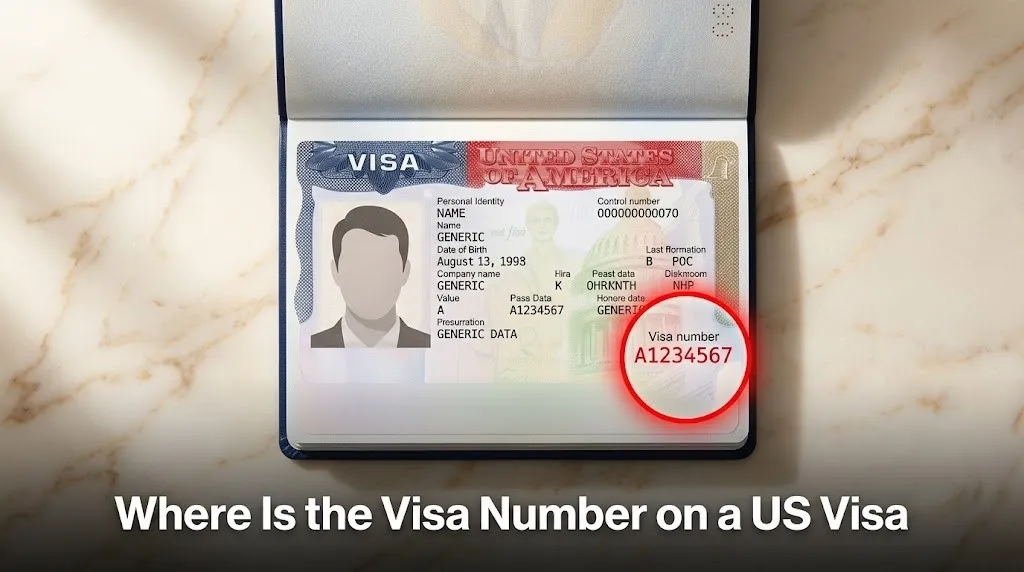
The visa number is an eight-character alphanumeric code on most standard nonimmigrant visas. It typically consists of one letter followed by seven digits.
Do not confuse the visa number with the control number which is located in the upper right corner. The control number is a longer alphanumeric string and serves a different administrative purpose.
First-time international travelers often miss the visa number because they are looking for a labeled field. The visa number does not have a label printed next to it on the visa foil.
Key Takeaway: The visa number is the red number in the lower right corner of your visa foil. It is an eight-character code below the expiration date.
Where to Find Visa Number: Step-by-Step Location
To find your visa number, open your passport to the page with the US visa foil. The visa is a rectangular sticker or printed document affixed to one of the visa pages.
Step one is to look at the lower right portion of the visa foil. Your eyes should move past your photo on the left and the biographical information in the center.
Step two is to locate the expiration date which is printed in the middle-right section of the visa. The visa number sits directly below this expiration date.
Step three is to identify the red printed number beneath the expiration date and above the machine-readable zone. The machine-readable zone is the white strip with two lines of text characters at the very bottom.
Step four is to confirm that the number you found is approximately eight characters long. If it is a longer string, you may be looking at the control number instead.
The visa number is not labeled on the visa foil itself. This absence of a label is the most common reason travelers cannot find it.
Where Is the Visa Number: Position on the Foil
The US visa foil contains multiple pieces of information arranged in a standardized layout. Understanding this layout helps you locate the visa number quickly.
The upper portion of the visa contains your photo on the left and the issuing post information on the right. The control number sits in the upper right corner.
The middle portion displays your biographical information including surname, given name, passport number, and visa type. The expiration date appears in the middle-right section.
The lower portion shows the annotation field, the visa number in red ink, and the machine-readable zone at the very bottom. The visa number sits alone below the expiration date.
The machine-readable zone at the bottom contains two lines of encoded text readable by scanning devices. This zone does not contain the visa number in a human-readable format.
Solo travelers checking their visa for the first time should start at the bottom right and work upward. The red number beneath the expiration date is what you need.
Where Is Visa Number: Visual Identification
The US visa number is visually distinct from other numbers on the visa foil. This visual difference helps you confirm you have found the correct number.
The visa number is printed in red ink on most current-issue US visas. The red color makes it stand out from the black text used for most other information.
The number is short at approximately eight characters on standard nonimmigrant visas. One letter followed by seven digits is the most common format.
The visa number sits in its own space with no other text immediately adjacent. This isolation makes it easier to identify once you know where to look.
The control number in the upper right is much longer, typically 12 to 14 characters. The passport number in the center section matches your passport bio page.
Families with multiple visas should check each visa individually. The visa number is unique to each visa foil even within the same passport.
Where Is the Visa Number Located: Older vs Newer Visas
The visa number location has remained consistent on US visas for many years though the ink color has changed. Older visas may present the number differently.
Visas issued after approximately 2010 feature the visa number in red ink in the lower right corner. This is the most common format travelers will encounter.
Visas issued before approximately 2010 may have the visa number printed in black ink. The location in the lower right corner remains the same.
Very old visas from the 1990s and earlier have a different foil design entirely. The visa number may appear in the upper portion of the document on these older formats.
Machine-readable visas became standard in the early 2000s with the current foil design largely stabilizing. The lower right red number has been consistent for over a decade.
If your visa looks different from the description, check the official US Department of State website. Visa foil designs are updated periodically for security purposes.
Key Takeaway: The visa number location is consistent in the lower right corner. Red ink is standard on visas issued after 2010.
What Is the Visa Number on US Visa: Definition
The visa number is a unique identifier assigned by the US Department of State to each individual visa issued. It corresponds to the specific visa foil affixed in your passport.
The visa number is not the same as your passport number or your visa application case number. It is a distinct identifier specific to the visa document itself.
The US Department of State uses the visa number for internal tracking and verification purposes. US Customs and Border Protection references the visa number when you enter the United States.
The visa number appears in US government databases connected to your biographical information and travel history. It is one of several identifiers linked to your immigration record.
Your visa number is required for various official forms and applications. The I-94 arrival record, DS-160 application, and employment eligibility verification may all request this number.
Business travelers completing I-9 employment verification should use the visa number from their current valid visa. The number must match the visa document presented for inspection.
What Does the Visa Number Look Like: Format Guide
The US visa number format consists of one letter followed by seven digits on most nonimmigrant visas. For example, a visa number might appear as V1234567.
The first character is always a letter that identifies the visa issuance category or location. This letter varies based on the issuing post and visa processing system.
The seven digits following the letter are numeric. There are no additional letters or special characters in the digit sequence.
Some visa types or issuance periods may use slightly different formats. Immigrant visas and diplomatic visas may have format variations.
The red ink color is the most reliable visual indicator of the visa number on current-issue visas. If you see a red alphanumeric code in the lower right corner, you have found it.
If your visa number does not match this format, do not assume it is incorrect. Verify against the US embassy website for your issuing post for format variations.
US Visa Number Format: Characters and Patterns
The standard US visa number format is one alphabetic character followed by seven numeric digits. No spaces, hyphens, or special characters separate the characters.
The letter prefix is not random and corresponds to the issuing system or post. Different letter prefixes may indicate different visa processing locations.
The numeric portion runs sequentially within the issuing system. The digits do not encode personal information or visa type.
The entire eight-character string is printed contiguously without breaks. When entering the number on a form, type all eight characters without spaces.
Some older visa numbers may use a different format with two letters and six digits. The format has standardized over time to the current one-letter-seven-digit pattern.
First-time travelers entering the visa number on an online form should type the characters exactly as they appear. Do not add the letter O for the number zero or vice versa.
US Visa Foil Explained: Every Field Identified
The US visa foil contains specific fields arranged in a standardized layout. Understanding each field helps you navigate the document confidently.
The upper left corner displays your photograph in color. This photo matches the one you submitted with your visa application.
The upper right corner contains the control number printed in black ink. This is not the visa number and is used for internal administrative purposes.
The center-left section lists your biographical information including surname, given name, and passport number. Your date of birth and nationality also appear in this section.
The center-right section displays the visa type, issue date, expiration date, entries allowed, and annotation field. The annotation field may contain additional information or remain blank.
The lower right corner contains the visa number in red ink. This is the number required for forms, applications, and official documentation.
Key Takeaway: The visa foil layout is standardized. Photo upper left, control number upper right, bio center left, visa number lower right in red.
Reading a US Visa: All Numbers and What They Mean
A US visa contains several distinct numbers that serve different purposes. Understanding which number is which prevents errors on official forms.
The passport number in the center section matches your passport biographical page. This number identifies your travel document, not your visa.
The control number in the upper right is a longer administrative tracking code. Do not use this number on forms requesting the visa number.
The visa number in the lower right is the unique identifier for your visa. This is the number you need for I-94 forms, DS-160 applications, and employment verification.
The annotation field in the center-right may contain additional numbers or information. The annotation is not the visa number and varies by visa type.
The machine-readable zone at the bottom contains encoded data for scanning. The MRZ does not display the visa number in a standard human-readable format.
Business travelers completing paperwork should copy the visa number directly from the lower right corner. Do not attempt to extract it from the machine-readable zone.
US Visa Stamp Information: Complete Field Guide
The US visa stamp contains a complete set of information about your visa authorization. Each field serves a specific purpose in the immigration process.
The issuing post name appears in the upper center identifying which US embassy or consulate issued the visa. The issue date shows when the visa was printed and placed in your passport.
The visa type or class appears as a letter and number combination such as B1/B2, F-1, or H-1B. This code identifies the purpose for which the visa was issued.
The entries field specifies whether the visa allows single entry, multiple entries, or a specific number of entries. M stands for multiple entries on most tourist and business visas.
The expiration date indicates the last day the visa can be used for travel to a US port of entry. The expiration date is not the date until which you can stay in the United States.
The visa number in the lower right corner uniquely identifies this specific visa document. All information on the visa foil is verified against this number in government databases.
Visa Number for I-94: When You Need It
The I-94 Arrival/Departure Record may request your visa number when you access your record online. The US Customs and Border Protection website requires accurate entry of this number.
The I-94 form tracks your entries and exits from the United States. Your visa number links your I-94 record to your visa document in CBP systems.
Access your I-94 record on the official CBP website by entering your passport information. The system may prompt for your visa number to verify your identity.
The visa number entered on the I-94 retrieval page must match exactly the number on your visa foil. Typographical errors will prevent access to your record.
First-time international travelers should retrieve their I-94 record after each entry to the United States. Verify that the admission stamp and departure date are correct.
The visa number on your I-94 must match the visa you used to enter the country. If you have multiple visas, use the number from the one presented at the port of entry.
Visa Number for DS-160: Application Requirements
The DS-160 Online Nonimmigrant Visa Application requires your current or previous US visa number. The form requests this number to link your new application to existing records.
The DS-160 form specifically asks for the visa number if you have previously held a US visa. You must enter the number exactly as it appears on the visa foil.
The visa number helps the US Department of State retrieve your previous application data. This can streamline the processing of your new visa application.
If your previous visa is in an expired passport, retrieve the old passport to copy the number. The visa foil remains in the passport even after the passport itself expires.
Enter the visa number without spaces or special characters on the DS-160 form. The system validates the format against expected patterns for visa numbers.
Solo travelers applying for a visa renewal should have their old passport accessible during the DS-160 process. The visa number is in the lower right corner of the expired visa.
Visa Number for Employment: I-9 Verification
The I-9 Employment Eligibility Verification form requires the visa number from your US visa. Employers use this number to verify your work authorization documentation.
The visa number is entered in the document information section of the I-9 form. It corresponds to the visa you present as a List A or List C document.
The employer must record the visa number exactly as it appears on the visa foil. The number must match the physical document presented for inspection.
For employment verification purposes, the visa must be unexpired and valid for the type of work authorized. The visa number confirms the document’s authenticity in government verification systems.
Business travelers on B1/B2 visas are not authorized for US employment. The visa number on a B1/B2 visa will not satisfy I-9 requirements for work authorization.
Foreign workers with H-1B or L-1 visas should ensure their visa number is legible before presenting it for I-9 verification. A damaged or unreadable visa number may delay the verification process.
Visa Number vs Control Number: Critical Distinction
The visa number and control number are two different identifiers on the US visa foil. Confusing them is the most common error travelers make.
The control number is located in the upper right corner of the visa foil. It is printed in black ink and is a longer string of 12 to 14 alphanumeric characters.
The visa number is located in the lower right corner of the visa foil. It is printed in red ink and is a shorter string of eight alphanumeric characters.
The control number is an internal administrative tracking code used by the visa processing system. It is not the number requested on I-94 forms or DS-160 applications.
The visa number is the unique identifier for the visa document itself. It is the number required for official forms, employment verification, and immigration record retrieval.
If a form rejects the number you entered, check whether you used the control number by mistake. The shorter red number in the lower right is almost always the correct choice.
Key Takeaway: Control number is long, black, upper right. Visa number is short, red, lower right. Forms want the red one.
Cannot Find Visa Number: Troubleshooting Guide
If you cannot find your visa number, verify that you are looking at the correct location on the visa foil. The lower right corner below the expiration date is the correct position.
Check the ink color on your visa. If your visa was issued after 2010, the number is almost certainly in red ink. Older visas use black ink in the same location.
Ensure you are not looking at the machine-readable zone at the very bottom of the foil. The visa number is printed above the MRZ, not within it.
Confirm that you are not reading the control number in the upper right corner. The control number is longer and printed in black ink.
If your visa foil is damaged or the red ink has faded, use a magnifying glass and good lighting. Hold the passport at an angle to catch the reflective ink surface.
If the visa number remains illegible, contact the US embassy or consulate that issued the visa. The visa number is stored in Department of State records and can be retrieved.
Important Accuracy Notes for US Visa Documentation
US visa foil designs and numbering formats are determined by the US Department of State Bureau of Consular Affairs. Format changes may occur without broad public announcement.
Verify the following directly with official sources:
Your visa number location may differ if you hold a visa issued before current design standards. Check the official US embassy website for your issuing post if your visa appears different.
The visa number format described reflects standard nonimmigrant visas. Immigrant visas, diplomatic visas, and special category visas may use different formats.
I-94 retrieval and DS-160 application interfaces change periodically. Access these systems through the official CBP and Department of State websites.
Employment eligibility verification requirements reference the visa number on the specific document presented. Use the number from the visa in your current valid passport unless instructed otherwise.
The most important action is copying the visa number exactly as it appears on your visa foil. The red eight-character code in the lower right corner is the visa number required for all official purposes.
Frequently Asked Questions About US Visa Number Location
Where exactly is the visa number on a US visa?
The visa number is in the lower right corner of the US visa foil below the expiration date.
It sits above the machine-readable zone at the very bottom of the visa stamp.
The number is printed in red ink on most visas issued after approximately 2010.
What color is the US visa number?
The US visa number is printed in red ink on most current-issue visas issued after approximately 2010.
Older visas issued before this period may have the visa number printed in black ink.
The red color is the most reliable visual indicator for recent visa holders.
Is the visa number the same as the control number?
The visa number and control number are different identifiers on the US visa foil.
The control number is a longer black code in the upper right corner used for administrative tracking.
The visa number is the shorter red code in the lower right corner required for official forms.
What is the US visa number format?
The standard US visa number format is one letter followed by seven digits on most nonimmigrant visas.
An example format would be one letter and seven numbers such as V1234567.
Some older or special category visas may use slightly different character patterns.
Where do I find the visa number for an I-94 form?
The visa number for an I-94 form is located in the lower right corner of your US visa foil.
Copy the red eight-character number exactly as it appears on the visa stamp.
Enter the number without spaces or special characters on the CBP I-94 retrieval website.
What should I do if I cannot read my visa number?
Use a magnifying glass and good lighting to examine the lower right corner of the visa foil.
Hold the passport at an angle to catch the reflective surface of the red ink if it has faded.
Contact the US embassy or consulate that issued your visa if the number remains illegible.
Your US Visa Number Located
The US visa number is the red eight-character code in the lower right corner of your visa foil. It sits below the expiration date and above the machine-readable zone with no label printed next to it.
Do not confuse it with the longer black control number in the upper right corner or the passport number in the center section. The visa number is unique to your visa document and is the identifier required for I-94 forms, DS-160 applications, employment verification, and official immigration records.
Copy the number directly from your visa foil character by character. Enter it exactly as printed whenever a government form requests your visa number. Keep your passport open to the visa page whenever completing official documentation.