Midwest Airlines was a beloved, defunct U.S. carrier that was simply too good to survive. It was famous for an all-premium product in a world that only wanted the cheapest fare.
The airline’s famous “Signature Service” featured wide, leather, two-by-two seating. Fresh-baked chocolate chip cookies were served on every flight.
This is a nostalgic look back at a fallen giant. You will remember the legendary seat, the famous cookie, and the sad story of why this airline is gone.
midwest airlines
Midwest Airlines was a regional U.S. carrier based in Milwaukee, Wisconsin. It operated from the 1980s until it was fully absorbed by Frontier Airlines in 2010.
The airline was originally founded as Midwest Express. It built its reputation on an all-premium, first-class-style service on every single flight.
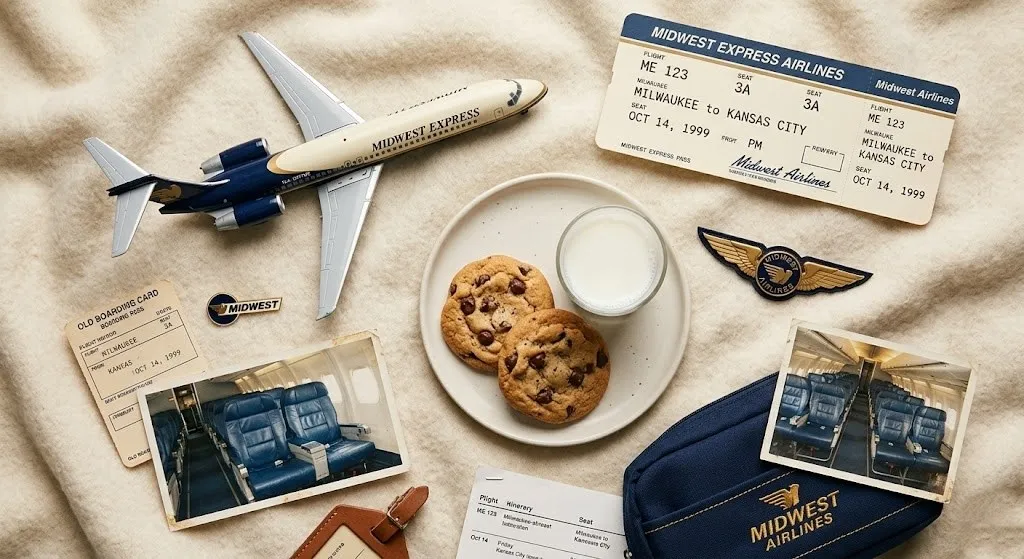
The core product was the “Signature Service.” Every seat on the plane was a wide, leather, two-by-two seat with no middle seats anywhere.
A business traveler who flew in the 1990s remembers this airline with a deep, genuine fondness. It was a civilized, human-scale experience in an industry that was rapidly dehumanizing.
The airline is gone, but its legend lives on. It is the standard by which all domestic premium products are still, nostalgically, measured.
- Founded: As Midwest Express.
- Based: Milwaukee, Wisconsin (MKE).
- Famous For: An all-premium, wide leather seat and fresh-baked cookies.
- Status: Defunct, fully absorbed by Frontier Airlines in 2010.
what happened to midwest airlines
What happened to Midwest Airlines is a classic tale of a premium product crushed by a low-cost world. The airline was acquired, stripped for parts, and extinguished.
The airline was bought by Republic Airways in 2009. The premium Signature Service was quickly dismantled in favor of a denser, standard economy layout.
The remnants of the airline were then sold to Frontier Airlines. The Midwest Airlines brand and its legendary product were permanently erased from the skies.
A former loyal flyer watched this corporate dismantling with a sense of genuine grief. A beloved travel companion was being turned into a generic, fee-charging machine.
The name and the product died because they could not compete on price. The market chose a cheaper, denser seat over a premium, comfortable one.
- 2009: Acquired by Republic Airways.
- The Dismantling: The all-premium product was immediately removed.
- 2010: The brand was fully absorbed into Frontier Airlines and ceased to exist.
Key Takeaway: Midwest Airlines was a victim of its own quality. The market demanded cheap fares, and its premium product could not survive the transition.
midwest express airlines
Midwest Express was the original name and the purest form of the airline. It was founded in 1984 by the Kimberly-Clark corporation.
The airline was initially a corporate shuttle for the paper giant’s executives. It was then opened to the public, bringing a corporate-jet level of service to commercial travelers.
The name “Express” was later dropped, and the airline became simply Midwest Airlines. The product, however, remained the legendary Signature Service throughout its life.
A first-time traveler in the 1990s who stepped onto a Midwest Express plane was shocked. The cabin was filled with huge, comfortable seats that belonged on a private jet.
The Midwest Express era was the golden age of the airline. It was a small, proud, and fiercely beloved regional carrier.
- Original Name: Midwest Express.
- Founding: 1984, as a corporate shuttle for Kimberly-Clark.
- Transition: Became Midwest Airlines, but kept the premium product.
midwest airlines history
The history of Midwest Airlines is a rise from a corporate flight department to a nationally recognized premium brand. It is a story of product excellence and corporate tragedy.
The airline expanded from its Milwaukee hub to serve major cities across the U.S. It built a fiercely loyal following among business travelers who valued comfort and service.
The airline was famous for its “Best Care in the Air” slogan. This was not just marketing; it was a genuine operating philosophy.
A traveler who flew Midwest Airlines historically will tell you it was different. The crew was warm, the seat was a throne, and the cookie was a warm, sweet welcome.
The history of the airline is a cautionary tale. It proves that a superior product does not guarantee survival in a brutally price-sensitive market.
- Era of Growth: Expanded from a small corporate shuttle to a national carrier.
- Peak: A beloved, premium niche airline with a cult following.
- Slogan: “The Best Care in the Air,” a genuine operating philosophy.
midwest airlines signature service
The Midwest Airlines Signature Service was the only product the airline offered for most of its history. Every seat was a first-class-style experience.
The service featured a wide, all-leather seat in a two-by-two configuration. This meant there were absolutely no middle seats on the entire aircraft.
The food was a step above standard airline fare. The meal service was served on china with a glass of wine, even on short flights.
A business traveler would book Midwest Airlines specifically for this service. It turned a mundane regional hop into a productive, comfortable, and civilized experience.
The Signature Service was the airline’s soul. When it was removed, the airline ceased to be Midwest Airlines.
- Seating: All-premium, two-by-two, wide leather seats.
- No Middle Seats: A revolutionary concept for a regional airline.
- Meal Service: High-quality, served on china with a glass of wine.
- Verdict: A first-class product on every plane, on every route.
midwest airlines seats
The Midwest Airlines seats were the physical embodiment of the airline’s legend. They were huge, plush, wide, and covered in soft leather.
The seats were configured two-by-two, with no middle seats. A passenger could sit in a window or an aisle seat, and both were equally spacious.
The seat pitch was incredibly generous for a regional aircraft. A tall traveler could stretch out and never feel cramped.
A tall traveler who remembers these seats will speak of them with a misty, nostalgic gaze. The legroom was a revelation compared to modern slimline seats.
The seats were the reason people paid a premium. They were the product, and they were glorious.
- Material: Soft, wide, all-leather.
- Configuration: Two-by-two, no middle seats anywhere.
- Legroom: Incredibly generous pitch.
- Result: A throne-like seat that made a modern first class recliner look stingy.
midwest airlines chocolate chip cookies
The Midwest Airlines chocolate chip cookie was the airline’s signature, beloved touch. It was baked on board and served warm.
The smell of fresh-baked cookies would waft through the cabin shortly before landing. It was a simple, powerful, and unforgettable piece of sensory marketing.
The cookie was a symbol of the airline’s “Best Care” philosophy. It was a small, warm, and human gesture in an industry of cold, corporate transactions.
A family traveling with children will remember the cookie as the highlight of the trip. A screaming toddler was instantly pacified by a warm, gooey chocolate chip cookie.
The cookie is the thing people miss the most. It was a simple, perfect act of hospitality.
- Served: Freshly baked and warm on every flight.
- The Smell: A legendary cabin aroma that signaled the end of the flight.
- Symbolism: A small gesture that represented the airline’s entire philosophy.
Key Takeaway: The warm, onboard-baked chocolate chip cookie was the emotional anchor of the Midwest Airlines experience.
best care in the air
“Best Care in the Air” was the official slogan of Midwest Airlines. It was more than a tagline; it was a promise the airline genuinely tried to keep.
The slogan was backed up by the physical product. The wide seat, the good food, and the warm cookie were the tangible proof of the claim.
The service culture was famously “Midwest nice.” The flight attendants were warm, genuine, and unpretentious.
A traveler who experienced the “Best Care in the Air” will tell you it was true. The crew was not just nice, they were a natural extension of a humane corporate culture.
The slogan is now a ghost. It is a painful reminder of a standard of service that no longer exists on U.S. domestic airlines.
- The Slogan: “The Best Care in the Air.”
- The Proof: The seat, the food, the cookie, and the genuinely warm crew.
- The Legacy: A nostalgic benchmark that no modern U.S. carrier has matched.
midwest airlines fleet
The Midwest Airlines fleet was a collection of small, efficient, and comfortable aircraft. The backbone of the fleet was the McDonnell Douglas DC-9 and the Boeing 717.
The DC-9 was an aging but beloved workhorse. Its cabin was configured with the airline’s famous two-by-two Signature Service seating.
The Boeing 717 was a modern, efficient, and quiet aircraft. It carried the Signature Service product forward into the 2000s.
A traveler remembers the sound of the DC-9’s rear-mounted engines. It was a distinctive, nostalgic noise that is now gone from the skies.
The all-Boeing 717 fleet was the final form of the airline. These planes were later repainted and absorbed into other carriers, erasing the last physical trace of Midwest.
- Backbone: McDonnell Douglas DC-9 and Boeing 717.
- Seating: All configured with the two-by-two Signature Service.
- Fate: The 717s were absorbed into other fleets and the product was stripped out.
frontier airlines merger midwest
The Frontier Airlines merger with Midwest was the final chapter in the airline’s sad corporate story. It was an acquisition that absorbed and then extinguished the brand.
Republic Airways first bought Midwest and stripped the premium product. The gutted airline was then sold to Frontier Airlines in 2010.
The merger was the complete opposite of the Midwest philosophy. Frontier is an ultra-low-cost carrier that charges for every amenity, including a carry-on bag.
A former Midwest loyalist who flies Frontier today experiences a profound cognitive dissonance. The airline that charges for a cup of water is the same corporate entity that once baked you a warm cookie.
The merger is a cautionary tale. It shows how a beloved, premium brand can be destroyed by the relentless financial logic of consolidation.
- The Buyer: Republic Airways, then sold to Frontier Airlines.
- The Destruction: The all-premium product was stripped immediately.
- The Irony: A premium icon was absorbed by an ultra-low-cost carrier.
republic airways midwest
Republic Airways was the corporate entity that bought and dismantled Midwest Airlines. It was a regional airline holding company.
The Republic acquisition was the death knell for the Signature Service. The new owners quickly removed the wide leather seats for a denser, standard economy layout.
The beloved “Best Care in the Air” product was replaced by a generic, fee-driven experience. The loyal customer base was outraged and abandoned the airline.
A business traveler who depended on the product watched in real-time as it was destroyed. The route network was gutted, the seats were ripped out, and the cookie ovens went cold.
Republic’s ownership was a brief, brutal, and destructive period. It paved the way for the final sale to Frontier.
- The Owner: Republic Airways Holdings.
- The Action: Immediately stripped the all-premium Signature Service.
- The Result: A gutted, generic airline that lost its entire loyal customer base.
midwest airlines legacy
The legacy of Midwest Airlines is a powerful nostalgia for a lost golden age of domestic air travel. It is a reminder that flying was once a pleasant, civilized experience.
The airline’s legacy lives on in the memories of its loyal flyers. The wide leather seat, the warm cookie, and the genuine “Midwest nice” service are folk legends.
The legacy is also a cautionary business lesson. A superior product, beloved by its customers, can still be destroyed by price competition and corporate consolidation.
A modern traveler who never experienced Midwest Airlines can learn from its story. The relentless pursuit of the cheapest fare has consequences.
The legacy is a ghost. It is the memory of a better way to fly, a standard that the modern U.S. airline industry has consciously abandoned.
- Positive Legacy: The memory of a genuinely premium, all-economy product.
- Negative Legacy: A cautionary tale of how a beloved brand was destroyed.
- The Ghost: The memory of a service standard that no longer exists.
milwaukee airport midwest airlines
Milwaukee Mitchell International Airport (MKE) was the home and heart of Midwest Airlines. The entire terminal felt like a Midwest Airlines branded lounge.
The airport was a fortress hub for the airline. Walking through the concourse, you would see the airline’s logo and colors everywhere.
The airport has been transformed since the airline’s demise. The Midwest branding is completely gone, replaced by the generic signage of multiple carriers.
A traveler passing through Milwaukee today can still feel the ghost of the airline. The wide, open spaces of the concourse feel empty without the familiar blue and white logo.
The airport is the best place to remember the airline. It was the stage upon which the “Best Care in the Air” performed its daily magic.
- Hub Airport: Milwaukee Mitchell International Airport (MKE).
- The Feel: The entire airport was a Midwest Airlines branded experience.
- Today: The branding is gone, but the ghost of the airline remains.
Frequently Asked Questions About Midwest Airlines
What was Midwest Airlines famous for?
Midwest Airlines was famous for its all-premium “Signature Service.”
Every seat was a wide, leather, two-by-two configuration with no middle seats.
Fresh-baked chocolate chip cookies were served warm on every flight.
Why did Midwest Airlines fail?
Midwest Airlines failed because its premium product could not compete on price.
The market shifted to demand the cheapest possible fare, not the most comfortable seat.
It was acquired, and its premium product was stripped to cut costs.
Did Frontier buy Midwest Airlines?
Yes, Frontier Airlines was the final owner of the defunct Midwest Airlines brand.
Republic Airways first bought and stripped the airline, then sold it to Frontier.
The Midwest brand and product were permanently erased by Frontier.
What kind of planes did Midwest Airlines fly?
The backbone of the fleet was the McDonnell Douglas DC-9 and the Boeing 717.
These aircraft were all configured with the airline’s famous two-by-two seating.
The all-Boeing 717 fleet was the final form of the airline.
Where was Midwest Airlines based?
Midwest Airlines was based in Milwaukee, Wisconsin.
Its hub was Milwaukee Mitchell International Airport (MKE).
The entire airport felt like a Midwest Airlines branded terminal.
What happened to Midwest Express?
Midwest Express was the original name of the airline.
It was founded in 1984 as a corporate shuttle for Kimberly-Clark.
The name was later changed to Midwest Airlines, but the premium product remained.
Midwest Airlines was a beautiful anachronism. It was a premium product in a world that only wanted the cheapest fare, and it was punished for its excellence.
The next time you are squeezed into a slimline seat, charged for a carry-on, and handed a tiny bag of pretzels, remember the wide leather seats and the warm cookie. Remember that flying was once a pleasure.
The legacy of Midwest Airlines is a ghost, but it is a powerful one. Its memory is a reminder that a better way to fly is possible.