The single most important fact about a visa is not the expiration date. The date that matters is the one written in your passport by the border officer.
Confusing the two dates is the most common and costly mistake an international traveler can make. It can lead to an arrest, a ban, and a ruined trip.
This guide explains the crucial difference between a visa and an authorized stay. You will learn how to read the stamp, the Schengen 90-day rule, and the consequences of overstaying.
how long does a visa last
A visa’s “life” is defined by two completely different dates. The first is the visa’s expiration date, printed on the visa itself.
The second, and far more important date, is your authorized period of stay. This is determined by the border officer when you arrive in the country.
A first-time international traveler often stares at the expiration date and panics. The key is to understand that the visa is just a key to knock on the door.
The visa’s validity period is the window of time you can travel to the country. The authorized stay is how long you can be inside the country.
- The Visa Expiration: The last day you can use the visa to enter the country.
- The Authorized Stay: The last day you can be legally present inside the country.
- The Key Rule: The authorized stay is the only date that matters for your departure.
visa validity period
The visa validity period is the window of time during which you can travel. It starts on the issue date and ends on the expiration date printed on the visa.
This period can range from a few months to ten years. A U.S. B1/B2 tourist visa, for example, is often valid for ten years.
The validity period tells you when you must enter the country. You cannot use the visa to enter after the expiration date has passed.
A business traveler with a ten-year visa can use it for multiple trips. Each time they arrive, a new, shorter authorized stay is issued.
The validity period is about entry, not about your stay. This is the core concept that causes confusion.
- What It Is: The window to travel to the port of entry.
- Example: A 10-year U.S. tourist visa.
- Key Concept: It governs entry, not the length of your visit.
visa expiration vs duration of stay
The visa expiration vs. duration of stay is the most important distinction in international travel. One is a suggestion, the other is a legally binding order.
The visa expiration date is the last day you can present the visa at a border. The duration of stay is the maximum number of days you can be in the country.
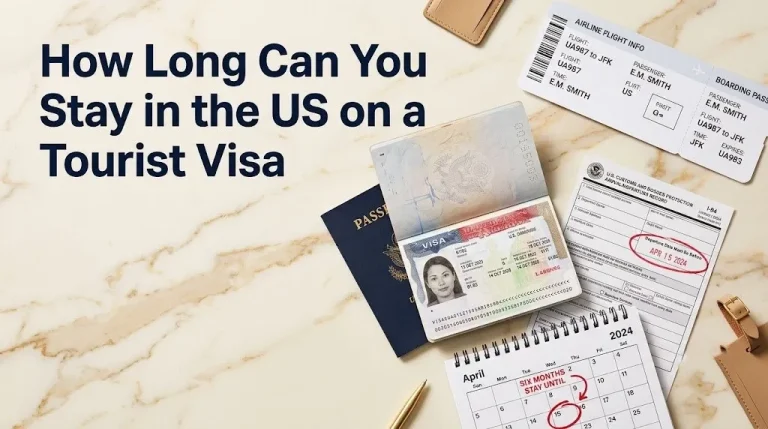
A U.S. Customs and Border Protection officer will decide your actual stay. They will write a specific date on your passport stamp or on your electronic I-94 record.
A tourist with a 10-year visa can enter the U.S. and be given a six-month stay. The visa expires in ten years, but the stay expires in six months.
Leaving by the date on your I-94 is non-negotiable. Staying past this date is a violation of your immigration status.
- Visa Expiration: The printed date on the visa foil in your passport.
- Duration of Stay: The date given to you by the CBP officer at the border.
- The Golden Rule: The officer’s date trumps the printed date.
Key Takeaway: The only date you need to care about is the one the border officer gives you. The printed visa expiration date is just a travel window.
how to read a visa stamp
Knowing how to read a visa stamp and a passport entry stamp is a critical travel skill. The information is there, but it can be cryptic.
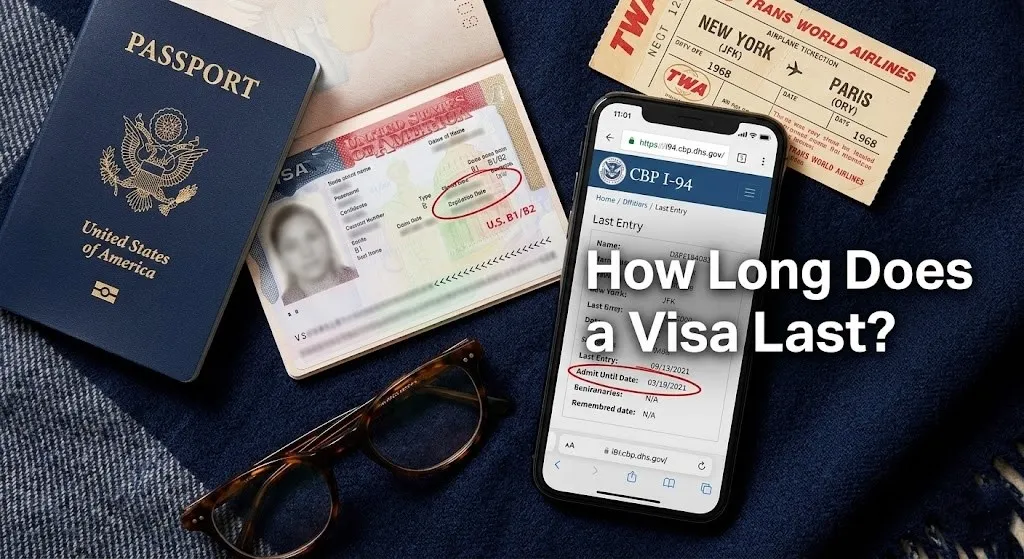
On a U.S. visa foil, look for the “Expiration Date.” This is the last day you can use the visa to enter the U.S.
On your passport entry stamp, look for the handwritten or printed date. The officer writes the “Admitted Until” date, which is your deadline to leave.
A traveler should take a photo of their entry stamp with their phone. This creates a personal, irrefutable record of your legal deadline.
The electronic I-94 record is the official, legal document for the U.S. The stamp in your passport is just a physical reminder.
- On the Visa Foil: Look for “Expiration Date.” This is your travel window.
- On the Entry Stamp: Look for a handwritten date. This is your deadline to leave.
- Online (U.S.): The I-94 website has your official, legally binding departure date.
how long does a tourist visa last
A tourist visa’s validity can last for many years, but the allowed stay is much shorter. The specific duration depends on the country and your nationality.
A U.S. B1/B2 tourist visa is commonly issued for a 10-year validity period. Each entry, however, typically grants a maximum stay of six months.
A leisure traveler with a 10-year visa can take multiple trips to the U.S. over a decade. They just need to leave on time on each visit.
The length of stay is decided at the border, every single time. A six-month stay is common but not guaranteed.
The specific visa duration for your nationality and destination must be verified. Always check the U.S. State Department website for the most current information.
- Visa Validity: Can be up to 10 years for a U.S. B1/B2 visa.
- Authorized Stay: Typically up to 6 months per visit.
- The Decider: The CBP officer at the port of entry.
us tourist visa validity
A U.S. tourist visa, or B1/B2 visa, is typically valid for 10 years for many nationalities. This is the window to travel to the U.S.
The authorized stay on each entry is determined by the CBP officer. It is usually for a period of up to six months.
The 10-year validity does not mean you can stay for 10 years. It means you can take trips for 10 years, with each trip lasting up to six months.
A family member visiting from a country with a 10-year visa can visit many times. They just need to leave on time and not overstay.
The visa validity is a privilege, not a right. A CBP officer can always deny entry or shorten your stay.
- Typical Validity: 10 years.
- Typical Stay: Up to 6 months per entry.
- The Rule: The CBP officer determines the exact stay.
schengen visa duration
A Schengen visa allows travel within the 27 European countries of the Schengen Area. The duration is strictly governed by the 90/180-day rule.
The 90/180-day rule means you can stay in the area for 90 days out of any rolling 180-day period. This is a strict, non-negotiable limit.
The visa in your passport might be issued for a specific validity period, like one year. The 90/180-day rule still applies to your actual presence.
A backpacker touring Europe must track their days carefully. The 180-day rolling window is a trap for travelers who come and go frequently.
Overstaying the 90-day limit in the Schengen Area is a serious offense. It can result in fines, deportation, and a ban on returning.
- The Rule: 90 days in any 180-day period.
- The Area: 27 European countries.
- The Trap: The 180-day window is rolling and can be confusing to calculate.
Key Takeaway: The Schengen 90/180-day rule is a strict, unyielding calculation. Use a Schengen calculator app to track your days precisely.
visa validity for u.s. citizens
Visa validity for U.S. citizens depends entirely on the destination country. A U.S. passport is powerful, but it is not a universal free pass.
U.S. citizens can travel to many countries for short tourist trips without a visa. The allowed stay is often 90 days.
For longer stays, work, or study, a visa is always required. The specific rules vary completely from country to country.
A business traveler from the U.S. must check the specific rules for their destination. A trip to the U.K. for a meeting is different from a six-month assignment in Singapore.
The U.S. State Department website is the definitive source. You can look up the entry requirements for any country by its name.
- Short Tourist Trips: Often no visa required, stays of 30 to 90 days.
- Work/Study/Long Stays: A visa is almost always required.
- Your Source: The U.S. State Department website for the destination country.
how long does a student visa last
A student visa, like a U.S. F-1 or J-1 visa, lasts for the duration of your academic program. The concept is called “Duration of Status.”
Your stay is valid as long as you are a full-time student pursuing your course. The visa expiration date is less important than your Form I-20.
You can stay in the U.S. for a grace period after your program ends. An F-1 student typically has 60 days to depart.
A student must keep their Form I-20 up to date. The program end date on this form is your deadline to leave.
The student visa in your passport might expire while you are studying. This is not a problem, as long as your I-20 is valid and you remain a student.
- The Concept: Duration of Status (D/S) on your I-94.
- The Key Document: Your Form I-20 (F-1) or DS-2019 (J-1).
- Grace Period: Typically 60 days after your program ends.
i-94 expiry explained
The I-94 is the official, electronic record of your arrival and departure for the United States. It is the single source of truth for your legal stay.
You can access your I-94 on the official CBP website. The “Admit Until Date” on this record is your absolute, legal deadline to leave the U.S.
The stamp in your passport is just a physical copy. The electronic I-94 is the legally binding document.
A traveler should always check their I-94 online after every entry. Border officers can make mistakes, and it is your responsibility to verify the date.
Leaving by the I-94 date is non-negotiable. This date overrides any other date you might see on your visa or your passport stamp.
- What It Is: The official record of your legal stay.
- Where to Find It: The CBP I-94 website.
- The Date: The “Admit Until Date” is your ironclad deadline.
how long can you stay with a visa
You can stay for the duration granted to you by the border officer. This is the only number that matters.
For the U.S., this date is on your I-94. For the Schengen Area, it is the 90th day within a 180-day period.
The visa in your passport is just the key. The officer’s decision at the border is the length of your invitation.
A traveler must know this authorized stay date and treat it like a sacred deadline. Setting a calendar reminder for a week before is a smart strategy.
The consequences of confusing the two dates are severe. An overstay, even by one day, can have long-term consequences.
- The Rule: Your stay is determined at the border, not by the visa.
- The U.S. Rule: Check your I-94 for the Admit Until Date.
- The Schengen Rule: 90 days in any 180-day period.
what happens if you overstay your visa
What happens if you overstay your visa is a cascade of increasingly severe consequences. It is a serious violation of immigration law.
An overstay can void your current visa. You will not be able to use it again for future travel.
Overstaying for a certain period of time can trigger a formal ban on re-entry. A ban can last for several years, or even permanently.
A traveler who makes a genuine mistake should contact an immigration attorney immediately. The rules are complex, and the penalties are harsh.
The length of the overstay determines the severity of the punishment. Even a one-day overstay can have consequences.
- Void Your Visa: Your current visa becomes invalid.
- Trigger a Ban: A formal ban on re-entering the country for years.
- The Rule: Never, ever overstay your authorized period.
how to extend a visa
You cannot extend a visa that is inside your passport. A visa is only used for entry and cannot be extended.
You can apply to extend your authorized stay while you are inside the country. This is a different process, handled by the country’s immigration agency.
In the U.S., you would file an application with U.S. Citizenship and Immigration Services. You must file before your I-94 expires.
A traveler who needs more time must act well before their deadline. The process is slow, and you must file while you are still in legal status.
Filing for an extension does not guarantee approval. You should not assume you can stay just because you have applied.
- Visa Extension: Not possible. A visa is for entry only.
- Extension of Stay: Possible, by applying to the immigration agency before your status expires.
- The Rule: File early, and do not assume approval.
Frequently Asked Questions About How Long a Visa Lasts
Is the visa expiration date the last day I can stay?
No. The visa expiration date is the last day you can use it to enter the country.
Your legal deadline to leave is the date given to you by the border officer.
This date is on your passport entry stamp or your U.S. I-94 form.
How long can I stay in the U.S. with a B1/B2 visa?
The B1/B2 visa is often valid for 10 years for travel to the U.S.
On each entry, a CBP officer typically allows a stay of up to six months.
The officer’s decision on the specific length of stay is final.
What is the 90/180-day rule for the Schengen Area?
It means you can stay in the Schengen Area for 90 days in any 180-day period.
The 180-day window is rolling, not a fixed calendar period.
This is a strict rule, and overstaying has serious consequences.
How do I find my I-94 expiration date?
You can find it on the official U.S. Customs and Border Protection I-94 website.
You will need your passport details to look up your record.
The “Admit Until Date” is your absolute deadline to depart the U.S.
What happens if I overstay my visa by one day?
An overstay, even by one day, can void your current visa.
It can also create problems for any future travel or visa applications.
The specific consequences depend on the length of the overstay.
Can I extend my visa while I am in the country?
You cannot extend the visa foil in your passport.
You can apply to extend your authorized stay with the country’s immigration agency.
You must apply before your current authorized stay expires.
Your visa is just a ticket to knock on the door. The border officer decides how long you can stay, and that single, specific date is your only legal truth.
Find that date on your passport stamp or your online I-94 record right now. Set a phone reminder for a week before, and never, ever overstay.
Visa policies and country-specific rules are a moving target. Always verify the current entry requirements at the official embassy website or the U.S. State Department travel page before you book.