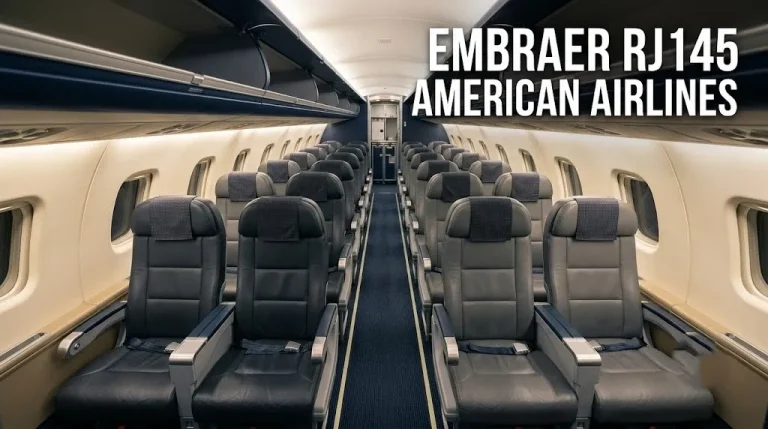
The interior airbus a321 american airlines operates varies significantly depending on whether you board a standard A321, an A321neo, or the newer A321XLR. These are not the same aircraft with the same seats.
American Airlines operates one of the largest Airbus A321 fleets among US carriers. The A321 family serves routes from short domestic hops to emerging transatlantic crossings.
This guide covers every cabin class on the A321, honest seat-level assessments, upgrade strategy, and which traveler profile benefits most from each configuration.
Interior Airbus A321 American Airlines: What to Expect Onboard
The interior of the Airbus A321 on American Airlines offers three distinct cabin classes: First Class, Main Cabin Extra, and Main Cabin.
The standard A321 configuration places First Class in rows 1 through 8 in a 2-2 layout. Main Cabin Extra and Main Cabin follow in a 3-3 layout toward the rear.

Overhead bin space is generally adequate for standard carry-on bags. Passengers boarding in later groups on full A321 flights may find bins full before reaching their row.
The cabin feel on the A321 is narrower than a wide-body aircraft. First Class seats sit along the window and aisle on each side with no center seat.
Budget travelers should note that the 3-3 economy layout offers no center seat-free option short of an upgrade. Main Cabin Extra adds legroom but does not change the middle seat situation.
| Cabin Class | Layout | Rows (Typical) | IFE Type | Meal Service |
|---|---|---|---|---|
| First Class | 2-2 | 1-8 | Seatback screen | Complimentary meal on most routes |
| Main Cabin Extra | 3-3 | 9-15 (approx.) | Seatback screen | Buy on board |
| Main Cabin | 3-3 | 16+ | Seatback screen | Buy on board |
Verify the specific row count and cabin layout for your exact flight on the American Airlines seat map at aa.com before booking.
Airbus A321 American Airlines First Class: The Complete Picture
American Airlines First Class on the Airbus A321 is a domestic recliner product, not a lie-flat business class seat. The seats recline to a generous angle but do not convert to a flat sleeping surface.
The cabin uses a 2-2 configuration. Every First Class passenger has either a window or aisle seat. There is no middle seat in First Class.
Seat count in First Class typically ranges from 16 to 20 seats depending on the specific A321 subtype and configuration. Confirm the exact count on your booking before assuming availability.
Business and frequent flyers who regularly fly transatlantic lie-flat products on carriers like British Airways or Iberia should adjust expectations. American Airlines A321 domestic First Class is a premium recliner, not an international business class cabin.
Insider Tip:
- Rows 1 and 2 board first and experience the least galley noise. Row 8 in First Class sits closest to the Main Cabin partition and experiences more foot traffic.
- The bulkhead row (Row 1) offers extra floor space but limits under-seat storage during takeoff and landing.
- Solo travelers who prioritize quiet should target window seats in rows 2 or 3.
The standout feature of A321 First Class is the 2-2 layout. No passenger is ever seated in a middle seat in this cabin.
The honest limitation is the recline. On a six-hour transcontinental flight, a recliner seat does not offer the sleep quality of a lie-flat product.
American Airlines A321 First Class Seat Pitch and Width
American Airlines A321 First Class seat pitch is typically around 37 to 38 inches, depending on the specific aircraft configuration. Seat width is approximately 21 inches.
These numbers place the A321 First Class product in the middle range of US domestic first class products. They exceed standard Main Cabin pitch by a meaningful margin.
Confirm your specific aircraft’s exact seat pitch on the American Airlines seat map tool at aa.com. SeatGuru also documents A321 configuration details sourced from airline disclosures.
| Cabin | Pitch (Typical) | Width (Typical) | Recline | Lie-Flat |
|---|---|---|---|---|
| First Class | 37-38 inches | ~21 inches | Yes, significant recline | No |
| Main Cabin Extra | 35-36 inches | ~17-18 inches | Standard recline | No |
| Main Cabin | 30-31 inches | ~17-18 inches | Standard recline | No |
Seat measurements vary by aircraft age and configuration subtype. Always verify your specific flight’s layout using the seat map on aa.com before making a seat selection decision.
Families with children should note that the 2-2 First Class layout means a family of four would need to book two pairs across the aisle. This is possible but requires early seat selection to secure adjacent pairs.
Tall travelers flying routes over four hours will notice the pitch advantage in First Class more acutely than on shorter segments. Below two hours, the pitch difference has less practical impact.
American Airlines A321neo Interior: What Changed
The American Airlines A321neo interior differs from the standard A321 in fuel efficiency and cabin refinements, though the seat configuration remains broadly similar across most routes.
The A321neo uses new-generation CFM LEAP or Pratt and Whitney PW1100G engines. These deliver meaningfully quieter cabin noise levels compared to the older A321 variant.
Cabin finishes on the A321neo received updated materials. Overhead bin design improved to accommodate more bags with a flip-down bin mechanism in newer deliveries.
The IFE system on the A321neo is typically newer in installation age. Screen responsiveness and reliability tend to be better on more recently delivered A321neo aircraft than on older standard A321 units.
First-time international travelers boarding an American Airlines A321neo on a domestic route will find it a comfortable, modern narrow-body experience. The aircraft does not offer any features exclusive to wide-body international jets.
According to SeatGuru, seat configurations between the standard A321 and A321neo on American Airlines remain consistent across most documented configurations. Verify your specific flight’s aircraft subtype on aa.com before booking.
The honest limitation of the A321neo cabin: the core seat product in all classes is not radically different from the standard A321. The improvements are in noise reduction, fuel efficiency, and bin design rather than seat comfort.
American Airlines A321XLR Cabin: The New Long-Range Variant
The American Airlines A321XLR is a new long-range narrow-body variant that extends the A321’s range to approximately 4,700 nautical miles, enabling transatlantic routes not possible on the standard A321 or A321neo.
American Airlines has placed orders for the A321XLR. Delivery timelines and specific interior configurations should be confirmed directly with American Airlines or on aa.com, as specifications are subject to revision before and after entry into service.
The A321XLR cabin is expected to include a lie-flat or near-flat premium seat on transatlantic configurations. This is a fundamentally different product from the domestic A321 First Class recliner.
Business and frequent flyers considering American Airlines transatlantic routes on the A321XLR should watch the specific seat configuration carefully. Lie-flat availability on the XLR would represent a meaningful upgrade over the current domestic A321 First Class experience.
The honest caveat: interior configurations for aircraft entering service can change between announcement and first passenger flight. Confirm the cabin layout for any A321XLR booking directly with American Airlines before purchase.
Insider Tip:
- The A321XLR’s range advantage opens routes from smaller US cities to European destinations without a connection through a major hub.
- Passengers on these routes should confirm whether the aircraft operates the full transatlantic cabin configuration or a modified domestic layout.
- Solo travelers considering transatlantic routes on the XLR should verify seat configuration before booking to confirm lie-flat availability.
American Airlines A321 First Class Review: The Honest Assessment
American Airlines A321 First Class delivers a comfortable premium recliner experience on domestic routes but does not compete with international lie-flat business class products.
The seat is wide enough for most body types. The recline is generous by US domestic standards. The cabin is quiet relative to the rear of the aircraft.
The Points Guy has identified American Airlines domestic First Class as a solid value for elite status members who receive complimentary upgrade priority. For travelers paying full first class fares without status, the value proposition is more debatable.
Service quality varies by crew and route. On transcontinental routes from JFK to LAX or JFK to SFO, American Airlines tends to assign more experienced crew and more complete meal service.
The specific limitation that most travelers miss: the First Class seat on the A321 does not offer a privacy divider or door. Every seat is open to the aisle and to the seat across.
Solo travelers who prefer privacy for work or sleep will notice the open configuration. There is no shell or partition that creates separation from neighboring passengers.
The boarding process for First Class starts before Main Cabin. Group 1 boarding applies to First Class, ConciergeKey members, and certain AAdvantage elite tiers.
American Airlines A321 First Class Food and Drink
American Airlines serves a complimentary meal in First Class on most A321 routes over a set duration threshold, with a hot meal typically offered on routes over roughly three hours.
Menu options rotate and vary by route and season. Shorter domestic routes may receive an enhanced snack service rather than a full hot meal course.
The honest food assessment: American Airlines A321 First Class meals are functional and reasonably presented but do not approach the culinary quality of international business class products on carriers like Japan Airlines or Singapore Airlines.
Drink service in First Class is complimentary. Options include beer, wine, and spirits on most A321 routes. The wine selection is modest by international standards.
Business and frequent flyers who regularly fly international business class should not expect the dine-on-demand, multi-course service of a long-haul wide-body product. Domestic A321 First Class meals are single-course or two-course at most.
Verify current menu offerings directly with American Airlines or on aa.com before your flight. Meal service details, menu content, and beverage selection change without public announcement.
Insider Tip:
- Pre-ordering meals is not a standard feature of American Airlines A321 domestic First Class in the way it is on some international carriers.
- Travelers with dietary restrictions should contact American Airlines directly to confirm available meal options on their specific route.
- Families with young children should verify whether child-specific meal options are available before the flight, as options vary by route and aircraft.
American Airlines A321 Entertainment System and WiFi
American Airlines A321 aircraft are equipped with seatback IFE screens and Viasat-powered in-flight WiFi on most configurations.
The seatback screens in First Class are larger than those in the Main Cabin. Screen quality is adequate for domestic flights but trails the 4K touchscreen systems on newer wide-body aircraft operated by carriers like Emirates or Qatar Airways.
The Viasat WiFi system on American Airlines A321 aircraft delivers satellite-based connectivity. Speed and reliability vary by route, flight path, and network congestion.
WiFi is available for purchase on most A321 flights. American Airlines offers tiered pricing plans. Verify current WiFi pricing directly with American Airlines before your flight, as pricing structures change.
Business and frequent flyers relying on in-flight WiFi for work should purchase the WiFi plan before boarding through the American Airlines app. Purchasing in-flight is possible but sometimes less reliable in terms of payment processing.
According to the official American Airlines website, WiFi plans are available by flight or by monthly subscription for frequent travelers. Confirm which plan applies to your specific A321 route before departure.
The honest limitation of the A321 IFE: the content library is moderate. Long-haul travelers used to the extensive IFE libraries on carriers like Emirates or Cathay Pacific will notice the difference on a domestic American Airlines A321 flight.
Key Takeaway: American Airlines A321 First Class is a domestic recliner product, not lie-flat. Manage expectations accordingly before booking or upgrading.
American Airlines A321 Main Cabin Extra
American Airlines A321 Main Cabin Extra offers extra legroom seats in the front economy rows, with seat pitch typically around 35 to 36 inches compared to approximately 30 to 31 inches in standard Main Cabin.
Main Cabin Extra seats are available for purchase as an upgrade from standard Main Cabin fares. AAdvantage elite members at certain status levels may receive complimentary Main Cabin Extra access.
The configuration remains 3-3 in Main Cabin Extra. There is no middle seat elimination. The sole advantage over standard economy is the additional legroom.
Overhead bin access is generally better in Main Cabin Extra due to the location in the forward economy section. Earlier boarding group assignments for these rows further improve bin space availability.
Budget travelers comparing the value of Main Cabin Extra versus First Class should note: Main Cabin Extra offers legroom only. First Class offers wider seats, a 2-2 layout with no middle seat, complimentary meals, and a larger IFE screen.
The honest assessment of Main Cabin Extra: on routes under two hours, the legroom premium may not justify the cost for passengers who do not need aisle exit-row access. On flights over four hours, the pitch difference becomes significantly more noticeable.
Verify current Main Cabin Extra pricing and elite status eligibility for complimentary access directly with American Airlines, as these policies change by status tier and booking period.
American Airlines A321 Economy Seats
American Airlines A321 standard Main Cabin economy seats have a typical pitch of around 30 to 31 inches and a width of approximately 17 to 18 inches.
The 3-3 layout means every passenger in the center seat group has no window and no direct aisle access. The center seat is the least comfortable position on any A321 economy row.
Meal service is not complimentary in Main Cabin on most American Airlines domestic A321 routes. Buy-on-board snacks and meals are available for purchase.
The seatback IFE screens are present in Main Cabin on most A321 configurations. Screen size in economy is smaller than in First Class. Confirm IFE availability on your specific aircraft using aa.com.
First-time international travelers using a domestic A321 segment as a connection should plan for a buy-on-board food situation in economy. Budget for in-flight food purchases unless a longer layover allows for terminal dining.
Families with children booking multiple economy seats should request adjacent seats as early as possible. American Airlines assigns seats at booking but does not guarantee family seating without pre-selection. A middle seat child next to a stranger is a common outcome on full A321 flights when booking late.
The honest limitation of A321 economy: on routes over four hours, the 30 to 31-inch pitch is genuinely tight for passengers over six feet tall. Main Cabin Extra or an upgrade to First Class makes a meaningful physical difference on longer segments.
American Airlines A321 Best and Worst Seats
The best seats on the American Airlines A321 in First Class are typically rows 2 and 3, offering quiet, good recline access, and distance from the forward galley noise.
Row 1 (bulkhead) offers extra floor space but restricts under-seat storage during takeoff and landing. This matters for travelers who need quick access to a bag during the flight.
Row 8 or the last row of First Class sits closest to the Main Cabin partition. Foot traffic, lavatory proximity, and noise from economy boarders make this the weakest First Class row.
In Main Cabin Extra, the exit row seats offer the most legroom on the aircraft. These seats typically cannot recline, which is a meaningful limitation on flights over three hours.
Solo travelers who want window seat isolation should target 1A or 2A in First Class. These seats place the passenger against the fuselage with only one neighbor rather than two.
Families with children should avoid bulkhead rows unless the children are very young. Bulkhead seats offer foot space but no seat-back pocket, eliminating storage for children’s items within easy reach.
The worst seats in economy on the A321 are the rear-most rows adjacent to the lavatories. Noise, odor proximity, and recline restriction make these the lowest-quality economy positions on the aircraft.
| Seat Location | Best For | Limitation | Profile Fit |
|---|---|---|---|
| Row 1A/1B First Class | Extra floor space, first off | No under-seat storage during flight | Solo traveler |
| Row 2A/2C First Class | Quiet, good recline | Standard pitch, no extra floor space | Business traveler |
| Row 8 First Class | Last First Class row | Closest to Main Cabin noise | Avoid if sensitive to noise |
| Main Cabin Extra Exit Row | Maximum legroom | No recline | Tall travelers |
| Last row economy | None notable | Lavatories, no recline | Avoid |
American Airlines A321 First Class Upgrade With AAdvantage Miles
AAdvantage elite members can request complimentary upgrades to American Airlines A321 First Class based on their elite status tier and fare class.
The upgrade priority order on American Airlines places ConciergeKey members first, followed by Executive Platinum, Platinum Pro, Platinum, and Gold members. Upgrade clearance depends on availability at the time of check-in or the upgrade request window.
Systemwide upgrade certificates are available to Executive Platinum members and above. These can be applied to confirmed First Class upgrades on eligible A321 routes and fare classes.
Co-pay costs and mileage redemption rates for paid upgrades to A321 First Class vary by route and are subject to change. Verify the current upgrade cost structure directly with American Airlines at aa.com before making any upgrade decision.
Business and frequent flyers with AAdvantage Platinum status or above should request upgrades at booking on less popular routes. On high-demand transcontinental A321 routes, upgrade clearance may not come until the day of departure.
According to the official American Airlines AAdvantage program terms, upgrade request windows and eligibility vary by fare class purchased. Basic economy fares are typically not eligible for complimentary upgrades. Verify eligibility for your specific fare at aa.com.
To request an upgrade on American Airlines A321 flights:
- Purchase an eligible fare class (not Basic Economy) on aa.com.
- Log into your AAdvantage account and confirm your elite status tier is recognized.
- Navigate to the “Upgrade” section for your specific flight.
- Submit your upgrade request or apply a systemwide upgrade certificate.
- Monitor your upgrade position via the American Airlines app as the departure date approaches.
- If not cleared before departure, present at the gate and confirm your position on the standby upgrade list.
Key Takeaway: AAdvantage elite status tier directly determines upgrade priority on A321 routes. Basic economy fares are generally ineligible. Verify eligibility at aa.com before booking.
American Airlines A321 vs Boeing 737 First Class
American Airlines First Class on the Airbus A321 and the Boeing 737 MAX 8 are both domestic recliner products, but the A321 First Class cabin typically offers a slightly wider seat and more consistent seatback IFE availability.
The Boeing 737 MAX 8 First Class also uses a 2-2 configuration. Seat pitch is comparable between the two aircraft types in First Class.
The main practical difference for passengers is the aircraft’s route assignment. American Airlines deploys the A321 and its variants on specific routes. Checking which aircraft type serves your specific flight is essential before making a seat selection decision.
| Feature | A321 First Class | 737 MAX 8 First Class |
|---|---|---|
| Configuration | 2-2 | 2-2 |
| Seat type | Recliner | Recliner |
| Lie-flat | No | No |
| IFE | Seatback screen (most) | Seatback screen (most) |
| Meal (3+ hr routes) | Complimentary | Complimentary |
| Noise level | Quieter (neo variant) | Standard narrow-body |
| Best for | Transcontinental, longer domestic | Short to medium domestic |
Budget travelers comparing upgrade costs between A321 and 737 routes should focus on route length rather than aircraft type. The seat experience is broadly similar. The route length determines whether First Class space is actually usable.
The A321 cabin is slightly longer than the 737 family cabin on most variants. This translates to more total seats and sometimes more upgrade inventory on A321 routes.
American Airlines A321 First Class: Is It Worth It?
American Airlines A321 First Class is worth the upgrade for elite status members receiving complimentary access on routes over three hours, but it requires honest evaluation for travelers paying full first class fares.
The seat does not go flat. The meal is a single-course or two-course domestic service. The IFE is functional but not exceptional. These are the honest parameters of the product.
On transcontinental routes, specifically JFK to LAX, JFK to SFO, and MIA to LAX, American Airlines operates what it markets as Flagship First Class. This product is available on a small number of A321 and other aircraft. Verify whether your specific flight carries this designation on aa.com.
The Points Guy identifies transcontinental Flagship First Class as one of the better US domestic premium experiences. Standard A321 domestic First Class is a meaningfully different product. Do not confuse the two.
Budget travelers paying out of pocket for A321 First Class on routes under two hours will almost certainly find the price premium unjustifiable. The flight is too short for the seat difference to translate into a meaningfully different experience.
Business and frequent flyers receiving complimentary upgrades through AAdvantage elite status get the best value from A321 First Class. The seat is genuinely more comfortable, the meal service is included, and the boarding priority saves real time.
The honest verdict: American Airlines A321 First Class serves elite members well on routes over three hours. Cash-paying leisure travelers on short routes should reconsider the upgrade cost carefully before purchasing.
American Airlines A321 Routes and Fleet Deployment
American Airlines deploys the Airbus A321 family on a mix of domestic, transcontinental, and emerging international routes, with the standard A321 and A321neo handling the majority of current flying.
Key domestic routes served by the A321 include high-frequency corridors between major hubs such as DFW to LAX, JFK to MIA, and ORD to DFW. Route assignments change seasonally and with fleet planning revisions.
The A321neo has been phased into higher-frequency routes where fuel efficiency provides the most operational benefit. This includes busy domestic corridors and select medium-length routes.
Verify the specific aircraft type serving your route by checking the aircraft type listed in the flight details on aa.com at booking. Aircraft swaps do occur and can change your seat product.
First-time international travelers using an A321 segment should confirm whether their specific flight is operated by a standard A321, A321neo, or A321XLR. These aircraft have different cabin configurations and service levels.
According to the U.S. Department of Transportation Air Travel Consumer Report, American Airlines operates one of the largest domestic fleets in the United States. The A321 family represents a significant share of that fleet across multiple hub airports.
The honest note on route deployment: American Airlines does not always maintain consistent aircraft assignment on a given route. Booking flexibility is advisable for travelers who specifically want an A321 rather than a substituted 737 or other narrow-body.
Key Takeaway: Always verify the specific aircraft type on your American Airlines booking at aa.com. Aircraft substitutions are common and can change your seat configuration and service level.
American Airlines A321XLR Transatlantic First Class
The American Airlines A321XLR transatlantic First Class product is expected to feature a significantly upgraded premium seat compared to the domestic A321 First Class recliner.
The A321XLR’s extended range enables American Airlines to operate transatlantic routes from secondary US cities that cannot economically support a wide-body aircraft. This opens premium cabin access on routes that previously had no first class option.
Interior configurations for A321XLR transatlantic operations are subject to change before and after aircraft entry into service. The specific seat type, whether fully lie-flat or angled-flat, should be confirmed on the American Airlines website at the time of booking.
Business and frequent flyers considering an AAdvantage miles redemption on an A321XLR transatlantic route should wait for confirmed seat specification before committing miles. A non-lie-flat transatlantic premium seat represents a fundamentally different value proposition than a flat bed.
The A321XLR transatlantic premium product will compete on select routes with Iberia, TAP Air Portugal, and British Airways narrow-body transatlantic operations. All of these carriers have different seat products. Research the specific cabin product on each carrier before comparing.
The honest limitation to watch: narrow-body transatlantic flights are longer than the seat product was originally designed to support. Even with an improved premium seat, a 7 to 8 hour transatlantic flight on a narrow-body aircraft is a different experience from the same time spent on a wide-body with a full lie-flat suite.
Insider Tip:
- The A321XLR’s appeal is the non-stop option from smaller US cities, not a superior seat versus wide-body transatlantic competition.
- Travelers prioritizing seat comfort for sleep should compare the A321XLR premium product against wide-body alternatives on the same route before booking.
- Solo travelers on A321XLR transatlantic routes should confirm the seat configuration specifically: whether it is 1-1, 1-2-1, or another layout that determines aisle access without disturbing a neighbor.
Important Accuracy Notes for American Airlines A321 Cabin Policies
American Airlines A321 seat configurations, meal service details, upgrade eligibility rules, and AAdvantage redemption rates change frequently and without advance notice.
Verify the following directly before traveling:
- Confirm the specific aircraft subtype (A321, A321neo, or A321XLR) on your booking at aa.com. Aircraft swaps are common.
- Verify current AAdvantage upgrade eligibility for your fare class and elite status tier before requesting an upgrade.
- Confirm meal service availability for your specific route and cabin class directly with American Airlines. Short-route service varies.
- Check current WiFi pricing and availability for your specific A321 flight before departure.
- For A321XLR bookings, confirm the cabin configuration and seat type before purchasing premium fares or using mileage redemptions.
The single most important action before departure: confirm your aircraft type and seat assignment on aa.com within 24 hours of travel, as aircraft changes can occur up to and including the day of your flight.
Frequently Asked Questions About the American Airlines Airbus A321 Interior
Does American Airlines A321 First Class have lie-flat seats?
American Airlines A321 First Class on domestic routes does not have lie-flat seats.
The seat reclines to a generous angle but does not convert to a flat sleeping surface on standard domestic A321 and A321neo configurations.
The A321XLR transatlantic variant may offer a different premium seat product. Confirm the specific seat type on your booking at aa.com before purchasing.
What is the seat pitch in American Airlines A321 First Class?
American Airlines A321 First Class seat pitch is typically around 37 to 38 inches on most documented configurations.
Seat width in First Class is approximately 21 inches, which is meaningfully wider than the Main Cabin configuration.
Verify the exact seat specifications for your specific flight on the American Airlines seat map tool or on SeatGuru before finalizing your seat selection.
How do I upgrade to First Class on American Airlines A321 using AAdvantage miles?
AAdvantage elite members can request complimentary upgrades to A321 First Class through the upgrade request function on aa.com or the American Airlines app.
Executive Platinum members and above have access to systemwide upgrade certificates applicable to eligible A321 routes.
Basic economy fares are generally ineligible for complimentary upgrades. Verify your fare class eligibility directly with American Airlines before submitting an upgrade request.
What is the difference between the A321neo and standard A321 on American Airlines?
The American Airlines A321neo uses newer-generation engines that deliver a meaningfully quieter cabin and better fuel efficiency than the standard A321.
Overhead bin design on the A321neo is improved compared to older A321 units. Seat configurations between the two variants are broadly similar on most American Airlines routes.
The A321neo does not offer a fundamentally different seat product in any cabin class compared to the standard A321. Verify the specific aircraft type on your booking using the flight details on aa.com.
Is American Airlines A321 First Class worth the upgrade cost?
American Airlines A321 First Class is worth the cost for AAdvantage elite members receiving complimentary upgrades on routes over three hours.
For travelers paying full first class fares on routes under two hours, the premium is harder to justify given the recliner-only seat, single-course meal, and moderate IFE.
The honest comparison point is the upgrade cost against the specific route length and whether the seat, meal, and boarding priority advantages translate into a meaningfully better experience on your specific flight.
What food is served in American Airlines A321 First Class?
American Airlines A321 First Class receives complimentary meal service on most routes over a set duration, typically routes of roughly three hours or more.
The meal is usually a single-course or two-course domestic service, not a multi-course dine-on-demand product. Menu content varies by route and season.
Verify the current meal offering for your specific A321 route directly with American Airlines before your flight, as service levels and menu options change without advance notice.
The Bottom Line on the American Airlines Airbus A321
The American Airlines Airbus A321 is one of the most common aircraft in US domestic flying. Understanding which subtype you are boarding and which cabin class genuinely suits your trip makes a real difference.
First Class on the domestic A321 is an honest recliner product with real advantages in space, meal service, and boarding priority. It is not a lie-flat international business class. Book accordingly.
The A321XLR transatlantic product represents a new chapter for this aircraft family on American Airlines. Confirm the seat configuration before committing miles or premium fares. Policies, seat specifications, meal service details, and AAdvantage upgrade rules all change without notice. Verify every detail directly at aa.com before departure.