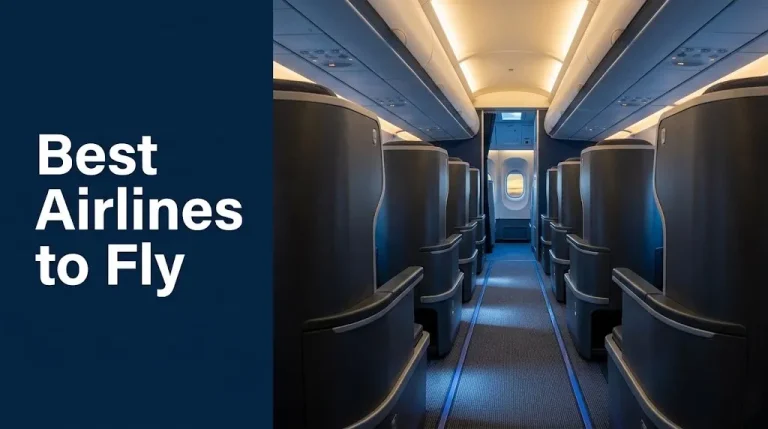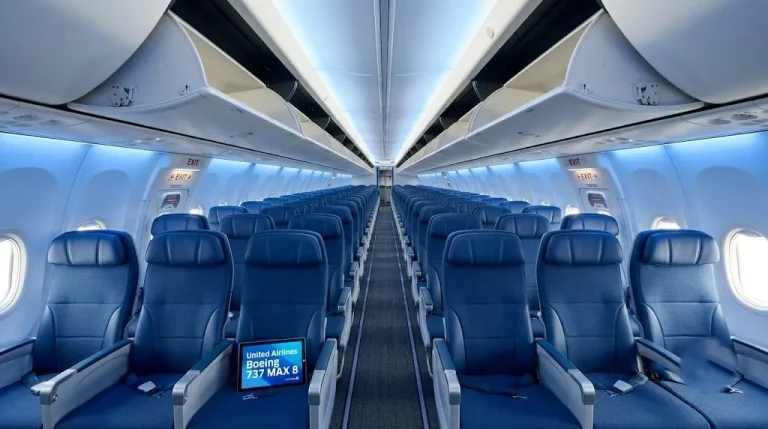
Asiana Airlines business class splits into distinct products depending on which aircraft operates your flight. The Airbus A350 Smartium suite delivers a lie-flat 1-2-1 seat with direct aisle access and a modern cabin design.
The A380 upper deck offers a 2-2-2 layout with lie-flat seats and a quieter cabin environment. Older Boeing 777 aircraft use angled-flat seats in a 2-2-2 configuration that no longer competes with Korean Air or Singapore Airlines.
This review names which aircraft flies where, what the Korean food actually delivers, how the Seoul lounge performs, and when Asiana beats Korean Air on value for transpacific travelers.
Asiana Airlines Business Class: What You Get at Every Step
Asiana Airlines business class begins at the departure airport with dedicated check-in counters and priority baggage handling. The checked baggage allowance provides two pieces at 32 kilograms each on transpacific routes.
Lounge access is provided through the Asiana Business Lounge at Seoul Incheon and partner lounges at overseas airports. Star Alliance Gold members receive the same lounge access as business class passengers.
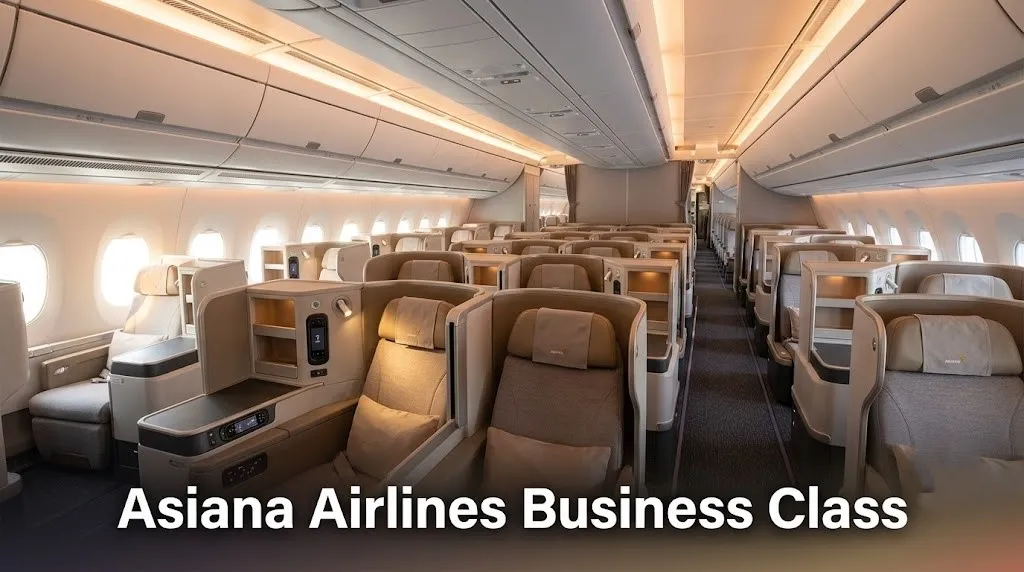
On board, the seat varies dramatically by aircraft type with the A350 offering the newest Smartium suite product. The A380 upper deck provides a spacious 2-2-2 cabin with lie-flat seats and a premium economy section behind business class.
In-flight service includes Korean and Western meal options, a wine and Champagne selection, and an amenity kit with Salvatore Ferragamo or L’Occitane products on long-haul routes. The service style emphasizes Korean hospitality with warm personal attention.
Business class passengers earn Asiana Club miles or partner miles in any Star Alliance frequent flyer program. The earning rates vary by booking class and partner program terms.
Key Takeaway: Asiana business class varies by aircraft. The A350 Smartium is the modern product. Older 777s have angled-flat seats.
Asiana Airlines Business Class Review: The Honest Verdict
Asiana Airlines business class on the A350 ranks among the best Star Alliance business class products for US to Seoul nonstop routes. The Smartium suite is lie-flat, private, and competitive with Korean Air’s Prestige Suites 2.0.
The Korean catering is a genuine highlight with bibimbap, Korean barbecue, and traditional banchan served on elegant tableware. Western options are solid but the Korean menu is the reason to choose Asiana over United or Delta on the same route.
The service style is warm and attentive with Korean cabin crew delivering hospitality that exceeds the industry standard on US airlines. Consistency is generally strong though occasional language barriers arise with more complex requests.
The Asiana Business Lounge at Seoul Incheon is functional but not exceptional. It falls short of the Singapore Airlines SilverKris Lounge and the ANA Suite Lounge in Tokyo.
The pending Korean Air merger creates uncertainty about the Asiana Club program and long-term Star Alliance membership. Travelers booking for 2026 should verify current alliance status and loyalty program terms before relying on Star Alliance benefits.
Asiana Airlines Business: Understanding the Airline
Asiana Airlines is South Korea’s second-largest carrier with its primary hub at Seoul Incheon International Airport (ICN). The airline is a Star Alliance member with codeshare partnerships including United Airlines, Air Canada, and Singapore Airlines.
Asiana operates from US gateways including Los Angeles, San Francisco, Seattle, New York JFK, and Honolulu with nonstop service to Seoul Incheon. The transpacific network is smaller than Korean Air’s but covers the major West Coast and Northeast hubs.
The airline is in the process of merging with Korean Air following regulatory approvals from multiple competition authorities. The merger is expected to create a single unified Korean flag carrier with Asiana brand integration into Korean Air.
The Asiana Club loyalty program remains active during the merger process with miles earning and redemption available on Asiana and Star Alliance partner flights. The program’s long-term future beyond the merger completion is uncertain.
Asiana Club Diamond and Platinum elite members receive Star Alliance Gold benefits including lounge access, priority boarding, and additional baggage allowance. These benefits remain valid as long as Asiana maintains Star Alliance membership.
Asiana A350 Business Class: The Modern Product
Asiana Airlines A350-900 business class features the Smartium suite in a 1-2-1 staggered configuration with direct aisle access from every seat. The layout places 28 suites across the forward cabin in alternating forward and rear-facing positions.
The seat converts to a fully lie-flat bed measuring approximately 76 to 78 inches in length with a shoulder width of 21 to 22 inches. Each suite includes a sliding privacy door on the aisle side creating a semi-enclosed personal space.
The 18-inch high-definition inflight entertainment screen is positioned on the suite wall or a retractable arm depending on seat position. The IFE system offers a good selection of Korean and international content with a responsive touchscreen interface.
Storage includes a side console, personal item compartment, literature pocket, and a shoe storage cubby below the ottoman. The sliding door adds a level of privacy that most business class products lack.
Solo travelers should select true window seats in rows where the seat is closer to the window than the aisle. The alternating configuration means some window seats are more exposed to the aisle depending on row position.
Couples traveling together should select the center pair seats in alternating rows where the seats are positioned closer together. The sliding door on each suite creates private space while the center proximity allows conversation.
Key Takeaway: Asiana A350 Smartium suite offers lie-flat 1-2-1 with a sliding privacy door. This is Asiana’s best business class.
Asiana A380 Business Class: The Upper Deck Experience
Asiana Airlines A380-800 business class occupies the entire upper deck with 66 seats in a 2-2-2 configuration. The lie-flat seats are arranged in pairs across the wide-body upper deck cabin.
The A380 business class seat is an older generation product than the A350 Smartium suite with no sliding door and a 2-2-2 layout. The seat converts to a lie-flat bed but window passengers must step over a seatmate to access the aisle.
The upper deck cabin feels quieter and more spacious than the main deck with higher ceilings and a dedicated premium cabin atmosphere. The A380’s structural quietness makes it one of the most peaceful cabins in commercial aviation.
Seat storage includes a side console, a small personal item compartment, and a literature pocket. The storage is adequate but less generous than the A350 Smartium suite.
Solo travelers on the A380 should select a window seat and accept the step-over trade-off for the quieter upper deck environment. Couples will find the paired 2-2 layout naturally suited to traveling together.
The A380 business class is superior to the 777 angled-flat product but trails the A350 Smartium suite in privacy and modernity. Select the A380 when it operates your route for the quietest cabin experience.
Asiana 777 Business Class: The Older Configuration
Asiana Boeing 777-200ER business class features angled-flat seats in a 2-2-2 or 2-3-2 configuration depending on the specific aircraft. These seats do not go fully horizontal and create a sliding sensation during sleep.
The 777 business class seat pitch in bed mode is approximately 60 to 65 inches with a width of 20 inches. The angled-flat position is noticeably less comfortable for sleep than the A350 and A380 lie-flat products.
The 2-3-2 configuration on some 777 aircraft includes a center column of three seats with two middle seats per row. This layout is among the least desirable business class configurations still operating on transpacific routes.
The inflight entertainment system on the 777 is an older generation with a smaller screen and more limited content than the A350 IFE. The system functions adequately but feels dated compared to the modern product.
Business travelers should avoid the Asiana 777 business class when the A350 or A380 operates the same route. The product gap between the 777 and the newer aircraft is significant and noticeable on 10-plus-hour transpacific flights.
Verify your specific flight’s operating aircraft on flyasiana.com before booking. The 777 angled-flat product is not competitive with Korean Air Prestige Suites or any other modern transpacific business class.
Key Takeaway: Avoid the 777 business class when possible. The angled-flat 2-2-2 seat trails the A350 and A380 significantly.
Asiana Business Class Seat: Configuration by Aircraft
Asiana Airlines business class seat configurations differ by aircraft type with four distinct products across the fleet. Understanding which product operates your route is essential for a satisfactory experience.
The A350-900 Smartium suite features 28 seats in a 1-2-1 staggered layout with sliding privacy doors. All seats offer direct aisle access and convert to fully lie-flat beds.
The A380-800 upper deck holds 66 business class seats in a 2-2-2 configuration. All seats are lie-flat with direct aisle access for aisle seat passengers only.
The 777-200ER operates with 22 to 24 business class seats in a 2-2-2 or 2-3-2 layout. These seats are angled-flat with a less comfortable sleeping position.
The 767-300 operates short-haul and select medium-haul routes with 15 to 18 business class seats in a 2-1-2 or 2-2-2 configuration. These seats may be recliner-style on some aircraft with no lie-flat capability.
Business travelers should target the A350 for the best product, accept the A380 for the quiet upper deck, and avoid the 777 and 767 when alternatives exist.
Asiana Business Class Food: Korean Dining Above the Pacific
Asiana Airlines business class dining emphasizes Korean cuisine with traditional dishes served alongside Western options. The Korean menu is the highlight of the onboard experience and the reason many travelers choose Asiana.
Bibimbap is the signature Korean dish served with gochujang sauce, sesame oil, and a selection of banchan side dishes. The bibimbap is prepared tableside on select routes with the crew mixing the ingredients at your seat.
Korean barbecue with grilled beef, ssamjang dipping sauce, and lettuce wraps appears on select long-haul menus. The barbecue is a standout dish that no Western carrier replicates on transpacific routes.
Western options include grilled beef tenderloin, seared salmon, and pasta dishes with appetizer and dessert courses. The Western menu is competent but not a competitive differentiator against United Polaris or Delta One.
The wine and Champagne list includes French Champagne, old and new world wines, and Korean traditional spirits. The beverage selection is solid though not at the Singapore Airlines or ANA level of curation.
Pre-order meal selection is available on select routes through the Asiana website before departure. The Korean meal options should be pre-ordered when available to guarantee your preferred dish.
Asiana Business Class Amenity Kit: What Is Included
Asiana Airlines business class amenity kits on long-haul flights feature Salvatore Ferragamo or L’Occitane products in a branded pouch. The kit brand rotates periodically with seasonal design changes.
The amenity kit includes facial mist, hand cream, lip balm, a dental set, eyeshade, earplugs, and socks. The quality is good mid-tier for international business class.
Noise-canceling headphones are provided after boarding and collected before landing on all long-haul flights. The headphone quality is adequate for the IFE system.
A sleeper suit is not provided on Asiana business class. Passengers who want sleepwear should pack their own comfortable clothes for the flight.
Slippers are provided and are comfortable for cabin use. A mattress pad is available on request and installed by the crew for the lie-flat bed mode.
The amenity kit and onboard comfort items are competitive with other Star Alliance carriers though the absence of a sleeper suit is a notable gap for overnight transpacific flights.
Asiana Business Class Service: Crew and Consistency
Asiana Airlines cabin crew deliver Korean-style hospitality with warm, attentive service throughout the flight. The crew addresses passengers with traditional Korean courtesy and genuine personal attention.
The service style is less formal than Singapore Airlines but more personal and engaged than many European carriers. Crew members anticipate needs and respond quickly to call button requests.
English proficiency is generally good among business class crew though occasional communication gaps arise with complex requests. Korean language skills are not necessary for an excellent experience but are appreciated by crew.
The crew-to-passenger ratio in the A350 Smartium cabin with 28 seats allows attentive service comparable to premium Asian competitors. The A380 with 66 business class seats has a lower ratio with slightly less personal attention.
Service consistency is generally strong on Asiana with fewer reports of significant service failures than on some competing carriers. The crew training emphasizes consistency and service recovery.
Business travelers accustomed to United Polaris or American Airlines Flagship Business will find the Asiana service a meaningful upgrade in warmth and personal attention.
Asiana Business Class Entertainment: IFE and Connectivity
Asiana Airlines business class inflight entertainment on the A350 features an 18-inch high-definition touchscreen with a modern interface. The content library includes Korean films, Hollywood new releases, television series, and music.
The A380 IFE system uses an older interface with a smaller screen than the A350 but a similar content selection. The screen quality difference is noticeable but the content library is comparable.
Wi-Fi is available on the A350 with pricing based on data allowance or flight duration. Connection quality is adequate for messaging, email, and light browsing though not suitable for streaming video.
The 777 IFE system is the oldest in the fleet with a smaller screen and more limited content selection. The dated IFE is another reason to avoid the 777 business class when alternatives exist.
Noise-canceling headphones are provided on all long-haul aircraft with a standard airline headphone quality. Passengers with high-end personal headphones can use the standard 3.5mm jack at each seat.
Solo travelers on overnight flights will find the IFE content sufficient for a transpacific journey. The Korean film selection is particularly strong and offers a cultural experience not available on Western carriers.
Asiana Business Class Lounge Seoul: ICN Ground Experience
Asiana Airlines business class passengers access the Asiana Business Lounge at Seoul Incheon International Airport Terminal 1. The lounge serves Asiana business class, Asiana Club elite members, and Star Alliance Gold passengers.
The lounge offers seating across a main hall with dining area, tended bar, and quieter rest zones. Shower suites are available with towels and basic toiletries provided.
The food selection features Korean dishes alongside continental breakfast items, sandwiches, and salads. The Korean food is the lounge highlight with bibimbap, noodles, and soup available.
The lounge becomes crowded during the morning departure bank and early evening transpacific departure windows. Seating and shower availability are strained during these peak periods.
The Asiana Business Lounge is functional and pleasant but does not compete with the best Star Alliance lounges in Asia. It falls short of the Singapore Airlines SilverKris Lounge and ANA Suite Lounge in food quality and ambiance.
Business travelers with long ICN layovers should plan to use the lounge for a shower and meal but should not expect a destination lounge experience. The Incheon airport itself offers extensive shopping and cultural experiences that may be a better use of a long connection.
Key Takeaway: The Asiana Business Lounge at ICN is functional with good Korean food options but trails the best Asian carrier lounges.
Asiana Business Class Star Alliance: Miles and Benefits
Asiana Airlines business class passengers earn miles in any Star Alliance frequent flyer program including United MileagePlus, Air Canada Aeroplan, and ANA Mileage Club. Miles accrue at 125 to 150 percent of flown distance depending on the partner program.
Star Alliance Gold status holders flying Asiana business class receive priority check-in, extra baggage allowance, and lounge access beyond what the business class ticket already includes. The incremental benefit is marginal for business class but valuable on mixed-cabin itineraries.
Asiana Club miles can be redeemed for Asiana business class award flights with availability generally better than partner programs. Asiana releases more award space to its own members than to partner airlines on popular transpacific routes.
United MileagePlus offers Asiana business class award redemptions with Saver and Everyday award levels. Saver availability on transpacific Asiana routes is limited and must be booked well in advance.
Air Canada Aeroplan offers dynamic pricing on Asiana business class awards with availability generally good. The Aeroplan pricing model makes Asiana redemptions accessible but at variable mileage costs.
The Korean Air merger may affect Asiana’s Star Alliance membership and partner mileage earning. Verify current alliance status and partner earning terms before crediting Asiana flights to a Star Alliance program.
Asiana Business Class Miles: Redemption Strategy
Asiana Club miles offer the best access to Asiana business class award space on transpacific routes. Asiana prioritizes award availability for its own members before releasing unsold inventory to Star Alliance partners.
United MileagePlus Saver awards on Asiana business class represent excellent value when available. Search for Asiana Saver space on united.com and be prepared to book immediately when it appears.
Air Canada Aeroplan offers more flexible pricing on Asiana awards with dynamic mileage costs. Aeroplan is the best Star Alliance program for Asiana redemptions when Saver space is unavailable.
ANA Mileage Club offers round-trip Asiana business class awards at competitive mileage rates. The ANA program requires round-trip booking which may not suit all travelers.
Chase Ultimate Rewards transfer to United MileagePlus and Air Canada Aeroplan for Asiana business class redemptions. American Express Membership Rewards transfer to ANA Mileage Club and Air Canada Aeroplan.
The Korean Air merger may create new redemption opportunities through Korean Air SKYPASS. Monitor merger developments for changes to Asiana award access through partner programs.
Asiana Business Class vs Korean Air: Honest Comparison
Korean Air business class on the 787-9 and A350 features the Prestige Suites 2.0 product in a 1-2-1 configuration with direct aisle access. This hard product is comparable to the Asiana A350 Smartium suite.
Korean Air offers a larger transpacific network than Asiana with more US gateways and daily frequencies on key routes. The broader network gives Korean Air an advantage for travelers whose departure city Asiana does not serve.
Asiana’s Korean catering is rated slightly higher than Korean Air’s by Conde Nast Traveler and Skytrax passenger surveys. The food difference is marginal and both airlines serve excellent Korean and Western options.
Korean Air operates its own loyalty program, SKYPASS, which is not part of Star Alliance. This limits mileage earning and redemption flexibility compared to Asiana’s Star Alliance membership.
Business travelers invested in Star Alliance should choose Asiana for mileage earning and elite benefits. Travelers invested in Korean Air SKYPASS or Delta SkyMiles should choose Korean Air for program alignment.
The pending merger will eventually combine the two airlines into a single entity. The competitive comparison between Asiana and Korean Air business class will become irrelevant once integration is complete.
Key Takeaway: Asiana A350 Smartium and Korean Air Prestige Suites 2.0 are comparable hard products. Network and loyalty program alignment decide the winner.
Asiana Business Class Routes: Where You Can Fly
Asiana Airlines business class operates from five US gateways to Seoul Incheon International Airport. Los Angeles, San Francisco, Seattle, New York JFK, and Honolulu receive nonstop Asiana service.
The A350-900 operates on select US routes with the newest Smartium business class product. Los Angeles and San Francisco see A350 service with higher frequency than other US gateways.
The A380-800 operates on high-density routes including Los Angeles to Seoul with the upper deck business class configuration. The A380 offers the most seats and the quietest cabin environment.
The 777-200ER operates on some US routes with the older angled-flat business class product. Verify aircraft type before booking to avoid the 777 on your specific travel date.
Intra-Asia connections from Seoul Incheon serve major cities including Tokyo Narita, Osaka, Shanghai, Beijing, Hong Kong, Bangkok, Singapore, and Manila. These connecting flights may use narrow-body aircraft with regional business class seats.
Verify current route schedules and operating aircraft on flyasiana.com before booking. Asiana’s route network and aircraft assignments change seasonally and without notice.
Important Accuracy Notes for Asiana Airlines Business Class
Aircraft assignments, route networks, and the Korean Air merger timeline for Asiana Airlines change without public notice. The Star Alliance membership status and Asiana Club program terms may shift as the merger progresses.
Verify the following directly before traveling:
Your specific flight’s operating aircraft type and business class configuration on flyasiana.com at the time of booking using the seat map tool.
Current Star Alliance membership status and partner mileage earning rates for Asiana flights through your frequent flyer program.
Asiana Club program terms and redemption rates on the Asiana Airlines website for any miles you plan to earn or redeem.
Asiana Business Lounge access and hours at ICN and partner lounges at your departure airport.
Korean Air merger status and any impact on Asiana bookings or loyalty program benefits.
The most important action is confirming your aircraft type before booking. Asiana business class on the A350 and on the 777 are fundamentally different products and the 777 angled-flat seat is not competitive on transpacific routes.
Frequently Asked Questions About Asiana Airlines Business Class
Does Asiana Airlines business class have lie-flat seats?
Asiana Airlines business class on the A350-900 and A380-800 offers fully lie-flat seats that convert to a bed.
The A350 Smartium suite features a lie-flat bed with a sliding privacy door and direct aisle access.
The Boeing 777-200ER uses angled-flat seats that do not go fully horizontal for sleeping.
What aircraft does Asiana Airlines fly in business class?
Asiana Airlines operates business class on the Airbus A350-900, Airbus A380-800, and Boeing 777-200ER on long-haul routes.
The A350 features the newest Smartium suite and the A380 offers a quiet upper deck cabin.
The 777 operates with an older angled-flat product that is less competitive on transpacific flights.
Is Asiana Airlines business class good for long-haul flights?
Asiana Airlines business class on the A350 is genuinely good for long-haul flights with lie-flat beds and direct aisle access.
The A380 business class is also comfortable for long-haul flights with a lie-flat bed and quieter upper deck cabin.
The 777 angled-flat product is less comfortable for sleep on flights exceeding 10 hours.
What lounge does Asiana business class use at Seoul Incheon?
Asiana Airlines business class passengers use the Asiana Business Lounge at Seoul Incheon International Airport Terminal 1.
The lounge offers Korean and Western food, shower suites, and a tended bar with wine and spirits.
The lounge can become crowded during peak departure windows with limited seating and shower availability.
How does Asiana business class compare to Korean Air?
Asiana A350 Smartium and Korean Air Prestige Suites 2.0 offer comparable lie-flat 1-2-1 business class products.
Korean Air has a larger transpacific network while Asiana offers Star Alliance mileage earning and redemption.
Both airlines serve excellent Korean cuisine with personal preference for specific dishes as the tiebreaker.
Can I use United miles on Asiana Airlines business class?
United MileagePlus miles can be redeemed for Asiana Airlines business class award flights through the Star Alliance partner award chart.
Saver award availability on Asiana transpacific routes is limited and must be booked well in advance.
Search for Asiana award space on united.com and verify current partner award rates before transferring miles.
Your Asiana Airlines Business Class Decision
Asiana Airlines business class on the A350 Smartium suite delivers a lie-flat 1-2-1 product with Korean hospitality that competes with the best transpacific carriers. The Korean food is a genuine highlight and the service is warm and attentive.
The A380 upper deck offers a quieter cabin with lie-flat seats in a 2-2-2 layout for travelers who prioritize cabin environment over privacy. The 777 angled-flat product should be avoided when the A350 or A380 operates the same route.
Verify your aircraft type on flyasiana.com before booking. Check Star Alliance partner award availability if using miles. Monitor the Korean Air merger status for changes to Asiana Club and alliance membership before committing to Asiana for future travel.