Flights were cancelled yesterday because of a compounding crisis that no single airline controls. Understaffed ATC facilities impose flow control restrictions, which create cascading delays, which overwhelm already-stretched airline crews, which trigger cancellations, which strand aircraft out of position for the next day’s schedule.
As of April 2026, the FAA employs approximately 10,800 fully certified air traffic controllers against its own target of roughly 13,800, a deficit of approximately 3,000 controllers. That gap, compounded by summer thunderstorm season, is why disruptions are hitting nearly every day.
This guide explains every major cancellation cause in plain language. It also covers your rights, your refund options, and the specific steps that make the biggest difference when your flight goes down.
Why Were Flights Cancelled Yesterday
Flights were cancelled yesterday most likely because of a combination of FAA air traffic control restrictions, severe summer weather, and cascading crew and aircraft positioning problems.
On June 18, 2026, SkyWest, Republic, Envoy Air, GoJet, American Airlines, and other carriers cancelled 338 flights while recording 4,106 delays across the country. The disruptions hit Chicago, Atlanta, Louisville, Boston, and Seattle hardest.

Every major US disruption day in 2026 follows the same architecture: a thunderstorm or low-visibility event forces the FAA to issue a ground stop at one or more major hubs. The trigger is real. But the trigger alone would produce a 60-to-90-minute delay window in a healthy, fully staffed system.
The current system is not healthy. Controllers are working mandatory overtime. Aircraft that missed rotations yesterday cannot be in the right city for today’s flights.
Budget travelers on regional routes operated by SkyWest, Republic, and Envoy Air face the highest cancellation rate. These carriers operate the feeder flights that connect small cities to major hubs.
Verify the specific cause of your cancellation directly with your airline’s gate agents before leaving the airport. The stated cause determines your compensation eligibility under current DOT rules.
How Many Flights Were Cancelled Yesterday
On June 18, 2026, 338 flights were cancelled and 4,106 delays were recorded across the United States. Those numbers reflect a typical disruption day in summer 2026, not an outlier.
On June 15, 2026, a widespread band of thunderstorms pushed the US aviation network into major disruption, with 855 cancellations and 7,773 delays recorded across the country. Southwest Airlines, American Airlines, Delta Air Lines, and United Airlines were all heavily affected.
| Date | Cancellations | Delays | Primary Cause | Worst Airport |
|---|---|---|---|---|
| June 18, 2026 | 338 | 4,106 | ATC/operational | Chicago O’Hare (ORD) |
| June 17, 2026 | 24 | 526 | Weather/congestion | Chicago ORD, Atlanta ATL |
| June 15, 2026 | 855 | 7,773 | Thunderstorms | LaGuardia, DFW, ATL, ORD |
| June 13, 2026 | 26+ | 214+ | Thunderstorms | Atlanta ATL |
| June 10, 2026 | 41 | 346 | Operational | Newark EWR |
FlightAware tracks real-time cancellation data at no cost. Check FlightAware’s cancellation tracker before you leave for the airport on any travel day.
Frequent flyers who monitor FlightAware the morning of departure have a 20-to-30-minute head start on rebooking before gate agents are overwhelmed with stranded passengers.
Key Takeaway: On a typical summer 2026 day in the US, between 100 and 850 flights are cancelled, depending on weather severity.
Most Common Reasons Flights Get Cancelled
The most common reasons flights get cancelled in 2026 are, in order of frequency: FAA air traffic control restrictions, severe weather, crew unavailability, mechanical issues, and aircraft positioning failures from prior disruptions.
| Cancellation Cause | Who Controls It | Compensation Eligible? | How Common in 2026 |
|---|---|---|---|
| FAA ground stop / flow control | FAA (external) | Generally no | Very high |
| Severe weather (thunderstorms, ice) | Nobody | Generally no | Very high (summer) |
| Crew shortage / scheduling failure | Airline | Yes | High |
| Aircraft mechanical AOG | Airline | Yes | Moderate |
| Aircraft out of position from prior day | Airline or weather | Depends | High |
| Airspace closure (military, security) | Government | Generally no | Low |
The reason for the disruption matters: airline-controlled issues such as crew shortages, aircraft rotation problems, or technical faults can support compensation claims, while severe weather or external ATC restrictions may reduce or block compensation.
First-time international travelers often accept whatever the airline says without asking whether the stated cause is airline-controlled or external. Ask the gate agent to specify in writing which category applies.
The distinction between “weather delay” and “operational delay due to crew unavailability” is not cosmetic. It determines whether you are entitled to meal vouchers, hotel accommodation, and other care obligations under the DOT’s 2026 airline customer service commitments.
FAA Air Traffic Control Shortage and Flight Delays
The FAA’s air traffic control staffing shortage is the single largest structural cause of recurring flight delays and cancellations in 2026. It is not seasonal. It will not resolve itself this summer.
The FAA currently employs approximately 10,800 fully certified air traffic controllers against an agency target of roughly 13,800, a gap of 3,000 that has persisted despite accelerated hiring since 2023. Training a controller from enrollment to full certification takes an average of three to five years.
FAA facilities are running at roughly 60% staffing. Controllers are working six consecutive days and 10-hour shifts just to keep the system functional. That level of fatigue produces errors and forces the FAA to implement flow control restrictions to maintain safety margins.
The Regional Airline Association reports that staffing shortages have diminished or eliminated air service at 76% of all U.S. airports. More than 500 regional aircraft are currently parked for lack of crews, and 324 communities have lost scheduled service.
Effective May 17 through October 24, 2026, daily operations at Chicago O’Hare International Airport (ORD) are capped at 2,708 flights, down from the more than 3,080 carriers had scheduled, a 14.9% reduction the FAA determined was necessary given available staffing and gate constraints.
Business and frequent flyers routing through ORD this summer should understand the cap is structural, not temporary. A 14.9% schedule reduction means some routes simply do not exist at their previously scheduled frequency.
According to Altitudes Magazine reporting on FAA staffing, the FAA does not expect to reach approximately 90% of its staffing target until fiscal year 2028. Travelers planning trips through 2027 should not expect this problem to resolve quickly.
How Weather Causes Flight Cancellations
Weather is the most visible cause of flight cancellations, but in 2026 it is also the amplifier that turns a staffing crisis into a full system breakdown.
A widespread band of thunderstorms on June 15, 2026 pushed the US aviation network into major disruption, with 855 cancellations and 7,773 delays. Southwest Airlines, American Airlines, Delta Air Lines, and United Airlines were all heavily affected, while airports including LaGuardia (LGA), Dallas-Fort Worth (DFW), Atlanta (ATL), Chicago O’Hare (ORD), and Denver (DEN) saw hundreds of disrupted flights.
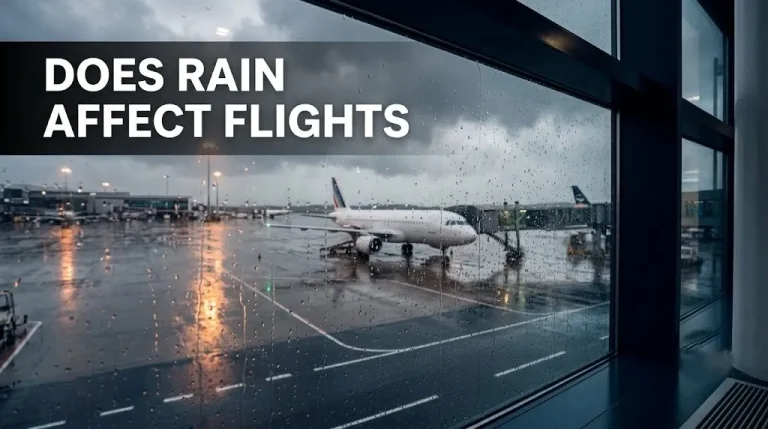
When the FAA issues a ground stop, all arrivals or departures at an affected airport are halted until the weather event passes. A ground stop at ORD affects every flight that was supposed to arrive there to pick up passengers for onward journeys.
The cause in the June 13, 2026 Atlanta disruption was severe thunderstorms moving across the Atlanta metropolitan area, the same storm system that simultaneously triggered 452 disruptions at Chicago O’Hare, 263 at Charlotte Douglas (CLT), 172 at Chicago Midway (MDW), and 102 at Washington Dulles (IAD).
Families with children face the worst version of weather disruptions. Hotel vouchers for family-size rooms are limited. Airlines prioritize rebooking passengers in smaller booking groups first because open seats on alternative flights fill quickly.
Insider Tip:
Check the FAA’s Air Traffic Control System Command Center website (fly.faa.gov) for real-time ground stops and ground delay programs before you leave home. A ground stop at your departure airport will show up there before it shows up on your airline’s app.
Look at the weather radar for your hub city, not just your departure city. A storm over Chicago delays your flight from Phoenix.
Solo travelers benefit most from this tip because they can rebook faster than families or groups.
Key Takeaway: Weather is the trigger, but an understaffed ATC system is why a two-hour storm creates a two-day recovery backlog.
Crew Shortage and Airline Cancellations
Crew shortages are a controllable cancellation cause, which means your compensation rights under DOT rules are stronger when an airline cancels due to crew unavailability.
Pilots and flight attendants are subject to strict rest and duty time regulations. Airline-controlled issues such as crew shortages and aircraft rotation problems may qualify for compensation under applicable passenger rights rules. An airline that cancels your flight because it ran out of available crew members owns that decision.
Airlines report that on clear-weather days, most delays are caused by ATC staffing gaps rather than mechanical or weather-related issues. During recent government shutdowns, staff callouts surged and some metro areas like New York saw up to 80% of controllers absent, forcing flight reductions and cancellations.
Regional carriers operated by SkyWest, Republic, Envoy Air, and GoJet are most exposed to pilot shortage impacts. These carriers fly Embraer 170/175 and Bombardier CRJ-700/900 aircraft on feeder routes. When a regional crew goes illegal on duty time due to cascading delays, the flight cancels, and no backup crew is available.
Pilot shortage solutions include: raising the mandatory retirement age (currently 65 in the U.S.), expanding ATP certification pathways, and increasing pay at regional carriers to slow attrition to mainline airlines. None of these is a 2026 fix.
Budget travelers who book the cheapest connecting itineraries through regional carriers face the highest crew-shortage cancellation risk. A direct flight on a mainline carrier is more expensive upfront but significantly less likely to cancel.
Verify the current status of crew-related delays for your specific airline by checking the DOT’s Air Travel Consumer Report, published monthly, which names the airlines with the highest controllable cancellation rates.
Mechanical Issues and Flight Cancellations
A mechanical cancellation means the specific aircraft assigned to your flight has a technical fault the airline cannot legally ignore. This is an airline-controlled cause, and your passenger rights are fully applicable.
When an aircraft is declared AOG (Aircraft on Ground) due to a maintenance issue, the airline must find a replacement aircraft or cancel. On routes served by a single daily flight, no replacement aircraft exists in that city. The flight cancels.
Mechanical cancellations are the least common of the major causes in summer 2026, but they tend to produce multi-day delays because replacement aircraft are scarce. Every spare airframe is already flying at maximum utilization.
Airlines are required to maintain aircraft under FAA Airworthiness Directives (ADs). When an AD grounding order affects a fleet type, every aircraft of that model at every airline must be checked before returning to service. The Boeing 737 MAX grounding of 2019 to 2020 is the most recent large-scale example.
First-time international travelers who see “mechanical issue” on the departure board should go immediately to the ticket counter, not wait at the gate. The gate agent can only help passengers already in front of them.
Insider Tip:
Ask the gate agent to confirm the AOG status in writing, or take a photo of the board showing the mechanical stated cause. This documentation helps if you later need to claim hotel or meal reimbursement from the airline.
Airlines are required under current DOT rules to provide meals and in some cases hotel accommodation for controllable cancellations, but they rarely advertise this at the gate.
Business and frequent flyers with elite status get access to the priority phone line and dedicated agents, which significantly cuts rebooking time in a mechanical cancellation scenario.
Key Takeaway: Mechanical cancellations are least common but most disruptive; document the cause in writing before leaving the gate.
Worst Airports for Flight Cancellations
The worst airports for flight cancellations in summer 2026 are Chicago O’Hare International Airport (ORD), LaGuardia Airport (LGA), Newark Liberty International Airport (EWR), Hartsfield-Jackson Atlanta International Airport (ATL), and Dallas-Fort Worth International Airport (DFW).
As of June 18, 2026, Chicago O’Hare International Airport (ORD) was experiencing significant operational disruptions, with a total of 207 flight cancellations and more than 1,200 delays reported across its network.
| Airport | IATA Code | Why High-Risk | Summer 2026 Status |
|---|---|---|---|
| Chicago O’Hare | ORD | FAA capacity cap + thunderstorms | FAA daily cap active through Oct 24 |
| LaGuardia | LGA | ATC understaffing, tight airspace | Critically understaffed TRACON |
| Newark Liberty | EWR | ATC shortage, hub congestion | New York TRACON classified critical |
| Atlanta Hartsfield-Jackson | ATL | Busiest airport globally, storm corridor | Regular afternoon thunderstorm disruptions |
| Dallas-Fort Worth | DFW | Hub congestion, convective weather | Frequent summer storm ground stops |
New York TRACON, which serves JFK, LGA, and EWR, and Southern California TRACON, which serves LAX, SAN, and BUR, are classified as critically understaffed and generate the most delay-propagation risk in the national airspace system.
Business travelers who can choose between ORD and Chicago Midway Airport (MDW) for short-haul routes should note that MDW has a lower cancellation rate than ORD, but Southwest Airlines (the primary MDW operator) has recently reduced its Midway presence.
If your itinerary connects through ORD, LGA, or EWR this summer, build a minimum three-hour connection buffer. The standard DOT minimum connection time is not sufficient during periods of active ATC flow control restrictions.
Which Airlines Cancel the Most Flights
Regional carriers operating on behalf of American Airlines, United Airlines, and Delta Air Lines cancel flights at significantly higher rates than their mainline partners. This is because regional operations depend on smaller crews and aircraft with less scheduling redundancy.
On June 18, 2026, SkyWest Airlines, Republic Airways, Envoy Air, and GoJet Airlines were identified as the primary carriers in the day’s 338 cancellations and 4,106 delays across the country. These four carriers operate regional aircraft under codeshares for mainline partners.
Among mainline carriers, Southwest Airlines bore the brunt of recent disruption days with the highest individual delay totals. American Airlines, United Airlines, and Delta Air Lines all recorded significant delays across their networks.
Southwest Airlines operates a point-to-point network that is structurally more vulnerable to cascading disruptions than the hub-and-spoke model used by United, American, and Delta. When one Southwest aircraft is delayed at one city, it affects the next four or five cities on that aircraft’s rotation.
Frequent flyers who hold elite status on United MileagePlus, Delta SkyMiles, or American AAdvantage gain priority rebooking access during mass disruption events. If you fly often enough through the high-risk hub airports, elite status is not a luxury; it is a practical risk management tool.
The DOT’s Air Travel Consumer Report publishes monthly airline cancellation rate rankings by carrier. Verify current rankings directly on the DOT website before booking a summer itinerary, as carrier performance shifts with staffing and operational changes.
Key Takeaway: Book mainline carriers over regional operators for critical trips; regional routes face the highest cancellation rates in summer 2026.
What Are My Rights When a Flight Is Cancelled
When your flight is cancelled, you are entitled to a full cash refund or rebooking at no additional charge, regardless of the reason for the cancellation.
Under the U.S. Department of Transportation’s Final Rule on Automatic Refunds, airlines must automatically issue refunds when your flight is cancelled and you choose not to accept the airline’s rebooking offer. This applies regardless of the reason for the cancellation, whether weather, mechanical issues, staffing, or ATC restrictions.
Cash refunds must be automatic and prompt. Refunds must be processed within seven days for credit card purchases and 20 days for other payment methods. Airlines can no longer substitute vouchers, travel credit, or other forms of compensation unless explicitly approved by the passenger.
The critical distinction is between controllable cancellations (crew shortage, mechanical failure, aircraft rotation) and uncontrollable cancellations (weather, government-imposed ATC restrictions). For uncontrollable cancellations, you retain the right to a refund or rebooking, but the airline’s obligation to provide meals and hotel accommodation is less clearly mandated.
According to the U.S. Department of Transportation’s Airline Cancellation and Delay Dashboard, airlines are required to provide a prompt refund to a ticketed passenger, including those with non-refundable tickets, should the passenger choose not to accept an alternative offered, such as rebooking on another flight.
First-time travelers should never accept a travel voucher in place of a cash refund without understanding that accepting a voucher may waive your right to the cash refund. Ask specifically whether you are being offered a refund or a credit.
Important Accuracy Note: DOT enforcement status of specific refund rules is subject to change. Verify your current rights directly at the DOT’s official Fly Rights page and the Airline Cancellation and Delay Dashboard before traveling.
How to Get a Refund for a Cancelled Flight
To get a refund for a cancelled flight, request it directly from the airline rather than waiting for an automatic credit or voucher to appear in your account.
Follow these steps:
- Ask the gate agent or airline customer service representative to confirm the cancellation in writing, or document the stated reason yourself with a screenshot or photo of the departure board.
- Open the airline’s app immediately and navigate to your booking. Look for a “Request Refund” option rather than accepting any automated rebooking offer without reading it first.
- If the app pushes you toward a travel credit, call the airline’s customer service line and state that you want a cash refund to your original payment method. Reference the DOT’s Automatic Refund Rule.
- For credit card purchases, refunds must be processed within seven days under current DOT rules. For other payment methods, the timeline extends to 20 days.
- If the airline does not process your refund within the required window, file a complaint with the DOT at the Airline Consumer Complaint portal.
As of December 2025, the DOT paused enforcement of refund requirements regarding cancelled flights in specific limited circumstances involving flight renumbering through June 30, 2026, while engaging in a new rulemaking. Verify the current enforcement status of DOT refund rules at transportation.gov before assuming all rules apply as written.
Budget travelers who paid for their ticket with a debit card rather than a credit card have fewer backup protections. Credit card chargeback rights provide an additional layer of refund enforcement if the airline fails to comply.
How to Rebook When Your Flight Is Cancelled
The fastest way to rebook a cancelled flight is to open the airline’s app and select an alternative flight before calling customer service or waiting in the gate agent line.
Follow this sequence for the fastest rebooking:
- Open the airline’s app the moment you learn about the cancellation. Most carriers now offer self-serve rebooking that moves faster than phone or in-person queuing.
- Check the same airline first. Rebooking on your original carrier is free. Rebooking on a different airline costs you the new ticket price upfront.
- If your original airline has no available seats within 24 hours, ask the gate agent whether an interline agreement with another carrier applies. United Airlines, American Airlines, and Delta Air Lines have interline agreements with select partners that allow them to rebook you at no cost on a competing carrier.
- Check competing airline apps simultaneously. If you purchase a new ticket on another carrier, keep your original boarding pass and receipts to submit a reimbursement claim later.
- If you are being rebooked on a flight the following day, ask immediately about hotel accommodation. For airline-controllable cancellations, several major carriers have committed to providing lodging for stranded passengers.
Families with children should note that airlines rebook individual seats, not seat blocks. Confirm that all family members are assigned seats together on the new flight before accepting the rebooking. Call if the app separates your party.
Solo travelers have the fastest rebooking experience because a single open seat is easier to find than four adjacent seats. Use this advantage by acting immediately and checking every departure option, including routing through alternative airports.
Key Takeaway: Open the airline app before you join any line; app rebooking is faster than gate agents during mass disruption events.
Does Travel Insurance Cover Cancelled Flights
Travel insurance covers cancelled flights in specific circumstances. The coverage depends entirely on the cause of the cancellation and the type of policy you purchased.
A standard trip cancellation policy covers you if you need to cancel before departure due to a covered reason, such as sudden illness or a family emergency. It does not automatically cover airline-initiated cancellations, because the airline’s own refund obligation applies in those cases.
A trip delay policy or travel interruption policy covers expenses you incur because of a cancellation: meals, hotel accommodation, ground transportation, and in some cases the cost of a replacement flight on another carrier. This is the coverage type that matters most when an airline cancels your flight and the rebooking timeline is 24 hours or longer.
Travel credit cards can help cover costs airlines will not pay. Delays under three hours for domestic and six hours for international flights do not qualify for an automatic refund under DOT rules, but credit card travel benefits may still provide coverage for those shorter delays.
Cancel For Any Reason (CFAR) coverage is the broadest type. It allows you to cancel your trip for any reason up to 48 hours before departure and recover a percentage of your prepaid costs, typically 50 to 75%. CFAR costs significantly more than standard trip cancellation coverage.
Compare travel insurance policies using InsureMyTrip or Squaremouth. Read the exclusions section of any policy before purchasing. Pre-existing condition clauses and “known event” exclusions, which can disqualify claims for disruptions that were already in the news when you bought the policy, are the most common sources of denied claims. Verify coverage terms directly with the insurer before buying.
Budget travelers who skip travel insurance entirely are making a higher-risk decision in summer 2026 than in prior years. The disruption frequency this summer means the probability of needing to use trip delay coverage on at least one leg is meaningfully higher than historical averages.
How to Avoid Flight Cancellations in Summer 2026
The most effective way to reduce your cancellation risk in summer 2026 is to avoid connecting through the highest-risk hub airports and to book the first departure of the day on your route.
- Avoid connecting through Chicago O’Hare International Airport (ORD), LaGuardia Airport (LGA), Newark Liberty International Airport (EWR), and Dallas-Fort Worth International Airport (DFW) unless no direct alternative exists.
- Book non-stop flights whenever possible. A connecting itinerary doubles or triples your exposure to cancellation events because each leg carries independent risk.
- Choose mainline carriers over regional operators for critical travel. A Boeing 737-800 operated directly by American Airlines has more scheduling redundancy than the same route operated by Envoy Air on an Embraer 175.
- Build a minimum one-night buffer before any event, appointment, or cruise departure. Arriving the day before a wedding, a conference, or a cruise embarkation is the single most effective cancellation protection available.
- Check FlightAware for your specific route’s historical cancellation rate before booking. Routes through the highest-risk hub airports show patterns.
Airline-controlled issues such as crew shortages and aircraft rotation problems may support compensation claims, but avoiding the disruption entirely is always better than claiming compensation afterward.
Business and frequent flyers should use airline status benefits proactively: select flights with multiple same-day alternatives on the same route, and book the earliest departure available to minimize the downstream cascade risk from mid-day ground stops.
The FAA summer 2026 capacity cap at ORD is active through October 24, 2026. Verify directly at the FAA’s Air Traffic Organization website whether additional capacity restrictions have been imposed at other high-demand airports for the period you are traveling.
Key Takeaway: Non-stop on a mainline carrier, first flight of the day, with a buffer night before critical events: these three choices eliminate most cancellation risk.
Morning vs. Afternoon Flights: Which Gets Cancelled Less
Morning flights are cancelled and delayed less frequently than afternoon and evening flights. This is not a myth or folk wisdom. It is a structural feature of how aviation operations cascade through the day.
The first departure of the day uses an aircraft that is already at the gate, fully fueled and cleared for dispatch. It has no prior-day cascade dependency. By contrast, a 4:00 PM departure depends on an aircraft that may have flown three or four earlier legs, each of which was exposed to delays.
The causes compound each other in a vicious cycle: understaffed ATC facilities impose flow control restrictions, which create cascading delays, which overwhelm already-stretched airline crews, which trigger cancellations, which strand aircraft out of position for the next day’s schedule. This cascade is at its worst in the late afternoon and evening.
Summer thunderstorm season reinforces the morning advantage. Convective weather in the U.S. Southeast and Midwest is most intense in the afternoon and early evening. A 7:00 AM departure typically departs before the storm cells form.
Families with children should book the earliest available departure on the day of travel, even if it means an uncomfortable early morning. An early departure that operates on time beats an afternoon departure that boards, delays, and then cancels after two hours at the gate.
Business travelers who book the first business class departure of the day also tend to find that aircraft are better cleaned, catered, and mechanically reviewed for the first push of the day, which adds a comfort dimension to the cancellation risk reduction.
What to Do When Your Flight Is Cancelled at the Airport
When your flight is cancelled at the airport, the first 10 minutes determine your rebooking options. Act immediately and in parallel across multiple channels.
Follow these steps exactly:
- Open the airline’s app immediately and look for a self-serve rebooking option. Do not wait for a gate agent announcement before starting this step.
- Call the airline’s customer service number from your phone simultaneously with checking the app. Hold times are long, but a callback option may be available. Start the call queue while you explore app options.
- Walk to the nearest airline ticket counter or customer service desk. The counter often has shorter lines than the gate desk during a mass disruption event.
- Ask the agent to specify and confirm the stated reason for the cancellation. Airline-controllable cause means you are entitled to meals, and potentially hotel accommodation, under the airline’s customer service commitments.
- If the airline offers you a travel voucher instead of a cash refund and you do not want to travel on a later date, decline the voucher and request your cash refund explicitly.
- Document everything: take photos of the departure board, screenshot any delay or cancellation notifications, and keep all receipts for meals, transportation, and lodging you incur because of the disruption.
In the United States, the Department of Transportation requires airlines to offer rebooking or refunds, but compensation for inconvenience is limited compared to EU regulations. If the airline cannot get you out on a reasonable timeline, explore alternatives immediately: book competing airlines, consider ground transportation, and document everything for a potential compensation claim later.
Budget travelers who purchased basic economy tickets should note that basic economy restrictions on some carriers may limit same-day rebooking flexibility. Ask the agent explicitly whether your fare class restrictions are waived during a cancellation event.
Important Accuracy Notes for Cancelled Flights at the Airport:
The cause of the cancellation is the most important fact to establish at the airport. Verify the following before leaving the gate:
- Ask the gate agent to state whether the cancellation is airline-controlled or due to weather or ATC restrictions. The answer affects your meal and hotel entitlements.
- Confirm whether your fare class restrictions are waived during the cancellation. Most airlines waive basic economy restrictions during mass disruption events, but policies vary by carrier. Verify directly with your airline.
- Check whether your credit card provides trip delay or trip cancellation coverage. Many travel credit cards from Chase, American Express, and Citi include coverage that activates after a specified delay threshold.
- File a DOT complaint at transportation.gov if the airline fails to provide the refund you are entitled to within the required window.
The single most important action before leaving the airport: get the cancellation cause in writing and request your refund immediately rather than accepting a voucher under pressure.
Frequently Asked Questions About Flight Cancellations
Why were so many flights cancelled yesterday?
The causes compound each other in a vicious cycle: understaffed ATC facilities impose flow control restrictions, which create cascading delays, which overwhelm already-stretched airline crews, which trigger cancellations, which strand aircraft out of position for the next day’s schedule.
In summer 2026, this cycle is amplified by seasonal thunderstorms hitting the same understaffed hub airports repeatedly.
Verify the specific cause for your flight by checking the airline’s app and asking gate agents directly.
How many flights get cancelled in the US every day?
On June 18, 2026, 338 flights were cancelled and 4,106 delays were recorded across the country, a figure that reflects a moderate disruption day.
On severe weather days in summer 2026, daily cancellations have exceeded 800 flights nationwide.
FlightAware publishes real-time daily totals at no cost.
Am I entitled to a refund if my flight is cancelled?
Under the U.S. Department of Transportation’s Final Rule on Automatic Refunds, airlines must automatically issue cash refunds when your flight is cancelled and you choose not to accept the airline’s rebooking offer, regardless of the cancellation reason.
Do not accept a travel voucher in place of a cash refund unless you explicitly choose to.
Verify your current refund rights directly at the DOT’s official transportation.gov website before traveling.
Does weather count as a reason I can’t get compensation?
Because disruptions driven by severe weather and related traffic controls are outside airline control, compensation is unlikely, but airlines should still provide care, rebooking, or refunds where needed.
You retain the right to a full cash refund or rebooking at no charge even in a weather cancellation.
Ask the airline to confirm the exact stated cause in writing, because some cancellations labelled “weather” have a controllable component.
Which US airports have the most flight cancellations?
New York TRACON, which serves JFK, LGA, and EWR, and Southern California TRACON, which serves LAX, SAN, and BUR, are classified as critically understaffed and generate the most delay-propagation risk in the national airspace system.
Chicago O’Hare International Airport (ORD) is operating under an FAA-imposed daily flight cap through October 24, 2026.
Avoid connecting through ORD, LGA, EWR, ATL, and DFW during summer 2026 for any travel where cancellation would cause serious consequences.
What should I do first when my flight is cancelled?
Open the airline’s app immediately and begin the self-serve rebooking process before joining any gate line or waiting for agent announcements.
Simultaneously call the airline’s customer service line to join the callback queue while you work the app.
Ask a gate agent to confirm the cancellation cause in writing before leaving the airport, because the stated cause determines your entitlement to meals, hotel accommodation, and future compensation claims.
The clearest lesson from summer 2026 flight cancellations is that the disruptions are structural, not random. FAA facilities are running at roughly 60% staffing, and controllers are working six consecutive days and 10-hour shifts just to keep the system functional. Summer thunderstorms will keep triggering the cascade until the staffing gap closes, which the FAA does not expect to happen before 2028.
The practical response is to build disruption tolerance into your travel planning: non-stop routes over connections, morning departures over afternoon, mainline carriers over regional operators, and a buffer night before anything consequential. When a cancellation happens despite those precautions, act immediately: open the app, document the cause, and request a cash refund before accepting any voucher.
Airline policies, DOT refund enforcement rules, and FAA staffing caps all change without public announcement. Verify your current passenger rights at transportation.gov and check flight status directly with your airline within 24 hours of any departure.