An American Airlines retro livery is a modern jet painted in the colors of a historic airline. It is a flying museum piece that you can still book a ticket on.
These planes are a tribute to the legacy carriers that merged with American. They are not just stickers; they are full, meticulously applied paint schemes.
This guide lists every heritage plane, its registration, and how to find it. You will know exactly which airport gate to haunt on your next layover.
American Airlines Retro Livery
The American Airlines retro livery program is an ongoing tribute to aviation history. It paints modern Airbus and Boeing jets in the liveries of merged predecessor airlines.
These are not just a marketing gimmick for aviation enthusiasts. They are a genuine effort to honor the employees and the legacies of the absorbed carriers.
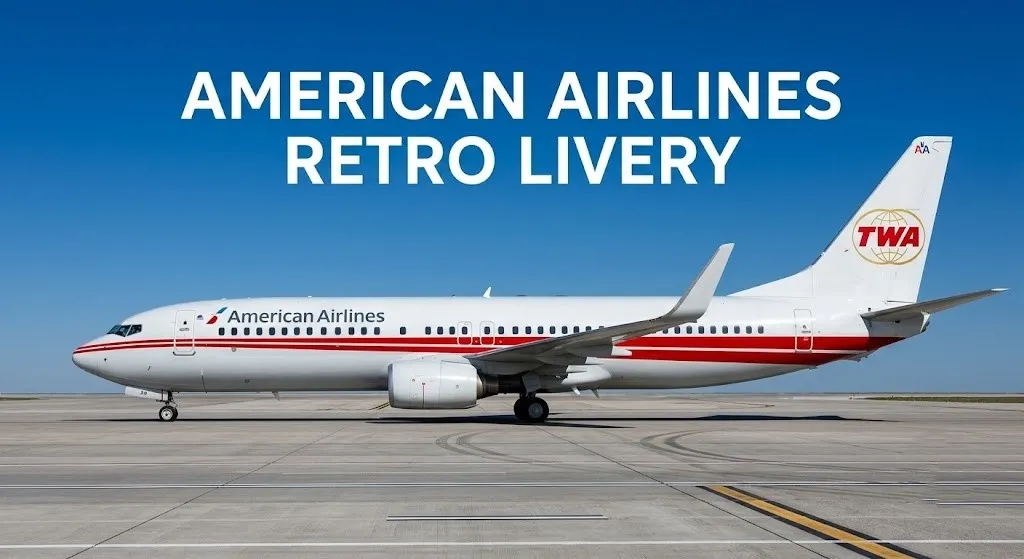
The program began with a TWA-themed Boeing 737-800. It has since expanded to include Piedmont, PSA, America West, and US Airways.
Aviation enthusiasts and families with kids should look for these planes. A retro jet parked at the next gate turns a boring layover into a memorable event.
The honest truth is that the paint is the only difference. Inside, the plane is a standard American Airlines cabin with modern seats and amenities.
Complete List of American Airlines Heritage Liveries
The American Airlines heritage fleet includes six distinct retro liveries as of 2026. The liveries are TWA, Piedmont, PSA, America West, US Airways, and Reno Air.
Each livery is painted on at least one Boeing 737-800 or Airbus A321. The airline has not ruled out adding more legacy carriers to the program.
The liveries are not just historical relics, they are active aircraft. They fly regular domestic routes every day alongside the standard grey and red fleet.
Plane spotters should note the specific aircraft type for each livery. The same TWA design looks different on the longer A321 than on the stubbier 737.
The honest challenge is that the fleet is small. You cannot book a specific livery, as the airline can swap aircraft at any time.
| Heritage Livery | Original Airline | Era of Operation | Modern Aircraft Type |
|---|---|---|---|
| TWA | Trans World Airlines | 1930-2001 | Boeing 737-800 / Airbus A321 |
| Piedmont | Piedmont Airlines | 1948-1989 | Boeing 737-800 |
| PSA | Pacific Southwest Airlines | 1949-1988 | Airbus A321 |
| America West | America West Airlines | 1981-2007 | Airbus A321 |
| US Airways | US Airways | 1939-2015 | Airbus A321 |
| Reno Air | Reno Air | 1992-1999 | Boeing 737-800 |
Key Takeaway: There are six active American Airlines heritage liveries honoring TWA, Piedmont, PSA, America West, US Airways, and Reno Air.
American Airlines TWA Retro Livery Aircraft
The TWA retro livery is the most famous and recognizable in the heritage fleet. It features the iconic twin red cheatlines and the golden globe on the tail.
The TWA livery is painted on a Boeing 737-800 and an Airbus A321. The 737 was the first heritage jet and started the entire program.
The design is a near-perfect replica of the final “TWA WorldClass” livery from the late 1990s. It is a deeply nostalgic sight for an older generation of flyers.
First-time spotters should look for the TWA plane first. It is the most reliable retro jet and flies out of American’s Texas and North Carolina hubs.
The honest emotional response from travelers is powerful. The TWA jet consistently stops people in their tracks in the terminal.
American Airlines Piedmont Heritage Jet
The Piedmont Airlines retro livery is a beautiful blue and white design. It features a bold “Piedmont” titles on the fuselage and a blue “speedbird” logo on the tail.
Piedmont was a beloved regional carrier on the East Coast. It was known for its excellent customer service and strong North Carolina roots.
The Piedmont livery is painted on a single Boeing 737-800. This jet is often seen at its spiritual home of Charlotte Douglas International Airport (CLT) .
Families with roots in the Carolinas or Virginia will love this plane. It is a flying piece of local history for the Mid-Atlantic region.
The honest beauty of this livery is its simplicity. The classic blue and white design is a sharp, clean contrast to the modern American grey.
The PSA “Smile” Livery on American Airlines
The PSA retro livery is the happiest plane in the American fleet. It features a giant, iconic smile painted on the nose of the aircraft.
Pacific Southwest Airlines was the legendary California intrastate carrier. Its smiling planes were a symbol of the friendly, fun spirit of the West Coast.
The PSA livery is painted on an Airbus A321. The long fuselage of the A321 is the perfect canvas for the smile.
Solo travelers on a West Coast trip should look for the PSA plane. It frequently flies routes out of Phoenix (PHX) and Los Angeles (LAX).
The honest truth is that this is the favorite livery of the crew. Pilots and flight attendants love watching the reaction of passengers as the smiling plane pulls up to the gate.
Key Takeaway: The PSA livery with the giant smile on the nose is on an A321 and is the most joy-inducing plane in the fleet.
The America West and US Airways Heritage Planes
The America West retro livery is a teal and copper design on an Airbus A321. The US Airways heritage livery is a dark blue and grey scheme, also on an A321.
These two liveries represent the most recent and complex chapters of American’s merger history. America West merged with US Airways, which then merged with American.
The America West livery is a nostalgic throwback for the Phoenix hub. The US Airways design is a somber, elegant tribute to the carrier that defined the East Coast.
Business travelers who were frequent flyers on the old US Airways will feel a pang of nostalgia. The dark blue scheme is a familiar sight to any former Dividend Miles member.
The honest observation is that these two liveries are often overlooked. The TWA and PSA planes grab the attention, but these are equally beautiful tributes.
American Airlines Retro Livery Aircraft Registrations
Every American Airlines retro jet has a unique public registration number. This “tail number” is how aviation enthusiasts track the plane on apps like FlightRadar24.
Knowing the registration is the only way to definitively track a specific heritage plane. The flight number does not tell you if a retro jet is operating it.
For example, the Boeing 737-800 in the TWA livery is registered as N915NN. This specific plane is the one you want to search for on a flight tracking app.
Plane spotters should save the list of registrations in a phone note. This turns a random airport sighting into a confirmed, logged catch.
Verify the current registration list on a dedicated aviation blog or the official American Airlines Newsroom. The airline can repaint a plane and change the registration without warning.
The Boeing 737-800 Retro Livery Fleet
The Boeing 737-800 is the workhorse of the American domestic fleet and the canvas for several retro liveries. The TWA, Piedmont, and Reno Air schemes are on this aircraft type.
The 737-800 is a shorter, stubby aircraft compared to the A321. The retro designs on this frame have a classic, compact, and highly photogenic look.
The 737-800 retro jets are often deployed on shorter, high-frequency routes. You will find them bouncing between the Texas and East Coast hubs.
Spotters at airports like Dallas/Fort Worth (DFW) and Miami (MIA) have the best chance to see a retro 737. These airports are major 737 bases for American.
The honest beauty of the 737 is its classic jet shape. The TWA livery on a 737 looks like it flew straight out of a 1990s aviation magazine.
The Airbus A321 Heritage Livery Fleet
The Airbus A321 is the modern long-haul domestic king for American. The PSA, America West, and US Airways liveries are painted on this aircraft type.
The long, elegant fuselage of the A321 provides a different canvas. The PSA smile on the longer nose of the A321 looks even more pronounced.
These A321s are often used on transcontinental routes and flights to the Caribbean. You can fly the PSA smile all the way from New York to Los Angeles.
Travelers on a coast-to-coast flight should check the aircraft type. If it is an A321, you have a better chance of getting a retro livery.
The honest truth is that the A321 retro jets feel more premium. The longer aircraft gives the heritage paint schemes a sleek, stretched look.
Key Takeaway: The A321 retro jets are used on longer flights. The PSA, America West, and US Airways liveries are exclusively on this type.
Where to Spot American Airlines Retro Planes at Airports
The best airport to spot American Airlines retro planes is Dallas/Fort Worth (DFW) . As the airline’s largest hub, nearly every heritage jet passes through here.
The best terminals are DFW Terminal C and Terminal A. These are the busiest American terminals for domestic flights.
Charlotte (CLT) is the second-best hub for retro spotting. The Piedmont jet is based here and is seen almost daily.
Solo travelers with a long layover at DFW should ride the SkyLink train. The elevated train provides excellent views of the ramp and parked aircraft.
The honest strategy is to check a flight tracking app while at the airport. Look for the specific registrations to see if any retro jets are on the ground nearby.
How to Track an American Airlines Retro Jet in Real Time
To track an American Airlines retro jet, you must use a flight tracking service. The best tools are FlightRadar24 or FlightAware.
You do not search by the flight number, but by the aircraft’s registration. Enter the N-number of the heritage plane you want to track.
The app will then show you the real-time location of that specific airframe. You can see its next flight, its current altitude, and its estimated arrival time.
Aviation enthusiasts can set up a custom alert on FlightRadar24. This will notify you when a specific registration files a flight plan.
The honest tracking tip is to check early in the morning. The airline files the day’s flight plans overnight, and you can see where the retro jet is scheduled to fly.
The History Behind American Airlines Heritage Liveries
The heritage livery program is a direct result of airline consolidation. Over the last three decades, American Airlines acquired TWA, Piedmont, PSA, America West, and US Airways.
The program was launched in 2015 to honor the employees of these absorbed airlines. It was a gesture of respect for the tens of thousands of staff who now wore the American uniform.
Each livery was chosen to represent a significant and beloved predecessor. The TWA design was the first and is a nod to the most iconic of the fallen giants.
First-time flyers might find the different logos confusing. The plane is an American Airlines flight, operated by American crews, just painted in tribute colors.
The honest history is that this is corporate consolidation with a human face. The liveries are a visual reminder of a more diverse and regional U.S. aviation past.
What Flying on an American Retro Livery Plane Is Like
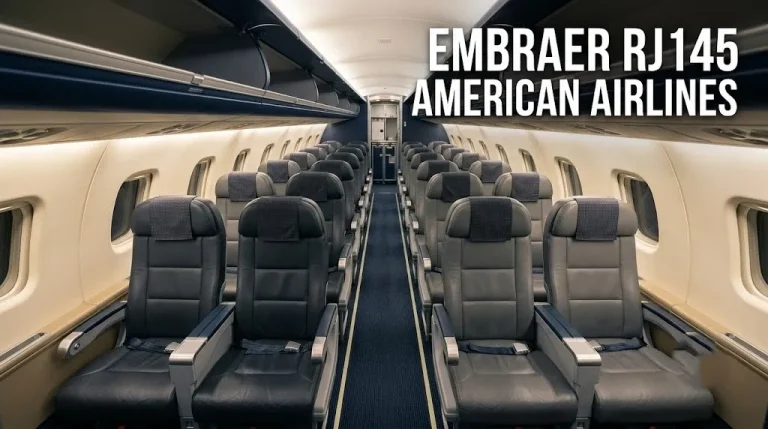
Flying on an American Airlines retro livery plane is exactly the same as any other American flight. The interior is a standard American Airlines cabin.
The seats are the same grey faux leather with adjustable headrests. The crew wears the standard modern American Airlines uniform.
The magic is entirely outside the airplane. It is the experience of walking down the jet bridge and seeing a historic paint scheme out the window.
Families with children should mention it to the gate agent. The crew sometimes will give a child a special trading card or a commemorative certificate.
The honest passenger experience is a normal American flight. The joy comes from the ramp view and the knowledge that you are on a flying tribute.
Key Takeaway: The interior is a standard American Airlines cabin. The magic is the exterior paint and the history it represents.
American Airlines Retro Livery vs. United and Delta Heritage Jets
The American Airlines heritage program is the most extensive among the major U.S. carriers. United Airlines also has a retro program with a single “Friend Ship” livery.
Delta Air Lines has a single retro jet in the classic “Widget” livery on an A321. American’s program is far more ambitious with its six different schemes.
American’s liveries are also more diverse, representing multiple distinct carriers. The United and Delta programs are a tribute to their own brand history, not a merger history.
Aviation enthusiasts widely consider American’s to be the best domestic program. The variety and the emotional connection to the lost airlines are unmatched.
The honest comparison is that United and Delta have a single nostalgia plane. American has a whole fleet of flying tributes to a complex merger history.
The Future of the American Airlines Heritage Fleet
The future of the American Airlines retro liveries is secure but not permanent. The airline has indicated the program is ongoing but has not announced a new livery since the pandemic era.
The existing planes will eventually need to be repainted. A heavy maintenance check typically strips the paint, and the airline must decide to reapply the retro scheme.
Aviation enthusiasts frequently campaign for new additions. A popular request is a retro “AirCal” livery to honor the California carrier that also merged with American.
Frequent flyers should enjoy these planes while they last. An aircraft repaint is a routine business decision, and a retro jet can disappear with little warning.
The honest future is that the program depends on leadership’s sentimentality. The current fleet is beloved, but there is no guarantee it will be renewed.
American Airlines Official Heritage Livery Verification
Airlines repaint aircraft without public notice, changing the retro fleet. The TWA 737 you tracked last month might be back in standard grey today.
You must verify the current aircraft registration list on an aviation enthusiast site. The official American Airlines Newsroom occasionally publishes updates on the fleet.
Do not book a flight solely based on a historical registration. The plane can be swapped for an identical standard aircraft at any time.
The only way to know for sure is to check the tail number on the plane at the gate. Compare it to the current list of known heritage jet registrations.
Frequently Asked Questions About American Airlines Retro Livery
Why does American Airlines have retro liveries?
American uses retro liveries to honor the history of merged airlines like TWA and US Airways.
It is a tribute to the former employees and the heritage of the aviation industry.
The program is a popular marketing and employee morale initiative.
How many retro liveries does American Airlines have?
As of 2026, American Airlines has six active heritage liveries in its fleet.
The liveries represent TWA, Piedmont, PSA, America West, US Airways, and Reno Air.
Each livery is on at least one Boeing 737 or Airbus A321.
Where can I see the American Airlines TWA plane?
The best place is American’s largest hub at Dallas/Fort Worth (DFW).
The TWA plane is also frequently seen at Charlotte (CLT) and Philadelphia (PHL).
Use FlightRadar24 with the registration N915NN to track its real-time location.
Are the interiors of American’s retro jets different?
The interior is a standard, modern American Airlines cabin with grey seats.
There are no retro touches, vintage seats, or historical decorations inside the plane.
The tribute is entirely on the exterior paint scheme of the aircraft.
How do I track an American Airlines heritage plane?
You must track it by its specific N-number registration, not the flight number.
Enter the tail number into FlightRadar24 or FlightAware to see the plane’s live position.
You can find the current list of heritage registrations on aviation spotter blogs.
What is the PSA smile livery on American Airlines?
It is an Airbus A321 painted in the classic Pacific Southwest Airlines livery.
The design features a giant, iconic smile painted on the nose of the aircraft.
It is widely considered the most cheerful and beloved plane in the American fleet.
The most important thing to know about the American Airlines retro livery program is that it is a beautiful, living tribute to aviation history. The planes are out there, flying every day, waiting to be spotted.
Your next step is to save the tail numbers of the heritage fleet in your phone. Then, pull up FlightRadar24 on your next layover and see if a piece of history is parked at your airport.
Aircraft can be repainted at any time. Always verify the current registration on an enthusiast tracker before planning a trip around a specific retro jet.
Look out the window, and enjoy the view. A retro jet at the gate is a small, colorful reminder of a richer, more diverse era of flying.